

The Top 10 Things Changing in Search by 2026 (And What Your Business Must Do Now)
Search is changing faster than at any point in the last 20 years. What used to be a predictable process—type a keyword, skim the list, click a link—has been replaced by answers, conversations, and AI-driven recommendations. Businesses that don’t adapt will fade. Those that do will gain a permanent edge.
And the shift isn’t coming in 2030.
It’s already here.
Below are the 10 biggest changes happening in search by 2026—and how you can prepare before your competitors even notice the ground moving beneath them.
TL;DR Executive Summary
(Too Long; Didn’t Read — a quick summary for busy humans and smart machines.)
- AI Search is replacing keyword search, and answers are replacing long lists of links.
- Most search traffic will soon happen inside AI assistants, not browsers.
- Visibility now depends on clarity, structure, trust signals, and niche authority—not tricks.
- Businesses that adapt early will dominate; those that don’t will disappear from AI-generated answers.
- This article breaks down the top 10 changes shaping the future of search and actionable steps to stay ahead.
Why I Pay Attention to This Shift
After years spent in Specal Forces, I learned that the environment always changes before anyone realizes it. The same principle carried into my work in cybersecurity, digital strategy, and ultimately AI visibility. While building Littlestone Media, I saw how quickly old methods fail when the landscape shifts.
Search is shifting now.
And the businesses with the best intelligence—those who anticipate and adapt—will be the ones who thrive.
The Top 10 Things Changing in Search by 2026
1. AI Assistants Become the Primary Search Engine
By 2026, people won’t “search” the way they used to—they’ll ask.
Siri. ChatGPT. Gemini. Perplexity. Copilot.
These tools will become the default interface between humans and information.
And instead of a list of links, you’ll get one answer—summarized, organized, and delivered instantly.
What this means for you:
If your business isn’t mentioned inside AI-generated answers, you’re invisible.
2. Zero-Click Becomes the New Normal
AI answers eliminate the need to click.
Users won’t visit 10 websites—they’ll trust the one answer the AI gives them first.
This means:
- Your website must feed structured, clear information.
- Schema markup and FAQs matter more than ever.
- You’re not competing for clicks—you’re competing for inclusion.
3. Topic Authority Outperforms Keywords
The old game:
Write one page for one keyword.
The new game:
Create deep, interconnected content on a topic so AI models recognize your business as an authority.
Think in clusters:
- One main page (the hub).
- 8–12 supporting pages (the spokes).
This is how AI determines expertise.
4. Local Search Becomes AI-Driven and Hyper-Specific
When someone says:
“Find me the best dentist who accepts cash and can see me today,”
AI doesn’t skim Google.
It performs dozens of micro-searches:
- Reviews
- Availability
- Local citations
- Service descriptions
- Pricing
- Patterns of trust
Local businesses must optimize for accuracy and clarity, not just keywords.
5. Generative Ads Replace Traditional PPC (pay per click)
Google and Microsoft already know this:
If people stop clicking, ads stop working.
So they’re building AI-native ad formats, such as:
- Sponsored recommendations inside AI answers
- Personalized suggestions based on intent
- Context-aware product placement
Businesses need both organic AI visibility and paid strategy to stay competitive.
6. Structured Data Becomes Mandatory, Not Optional
AI reads structure better than prose.
You MUST have:
- FAQ schema
- Product schema
- Service schema
- Local business schema
- Review schema
Schema is how machines verify you exist, what you do, and where you fit.
Without it, AI systems guess. And guessing means you lose.
7. Trust Signals Dominate Ranking and Relevance
AI is cautious. It avoids risk.
So it only cites businesses that look real, stable, and trustworthy.
Trust signals include:
- Consistent NAP (Name-Address-Phone) across directories
- Real customer reviews
- Transparent service descriptions
- Clear business identity
- Secure, fast, mobile-optimized website
- Verified profiles on major platforms
This is the new E-E-A-T era.
8. User Intent Becomes the Core Ranking Factor
AI understands why a user is asking something.
It interprets:
- urgency
- budget
- location
- preferences
- past behavior
Businesses must answer real questions, not chase keywords.
If your content solves human problems better than competitors, AI will choose you.
9. Your Website Becomes a Source, Not the Destination
In traditional SEO, the goal was to drive traffic.
In AI SEO, the goal is to supply trustworthy data that AI systems can quote.
Your website becomes a reference library that AI pulls from—not a place users spend time browsing.
This flips the entire playbook.
10. Businesses With Clear Messaging Win
AI can’t summarize confusion.
If your website mixes too many topics, uses jargon, or hides key information, AI models skip you.
Businesses that communicate clearly will dominate AI visibility.
Clear beats clever.
Simple beats complicated.
Truth beats tricks.
Bad Example vs. Good Example
Bad Example: A Confusing Home Contractor Website
- No clear list of services
- Outdated pages
- No schema
- Poor mobile design
- Keyword-stuffed text
- Missing location info
- Five different phone numbers
- Stock photos instead of real work
AI systems think:
“I can’t verify this business. Too risky.”
Good Example: AI-Ready Contractor Website
- Lists clear services with simple descriptions
- Includes service-area pages
- Has Local Business schema
- Provides real photos of completed projects
- Includes a 10-question FAQ
- Has consistent NAP across all platforms
- Contains a topic cluster on home renovation
- Loads fast, looks modern, and answers real questions
AI systems think:
“This business is legitimate, trustworthy, and easy to understand.”
How to Prepare for These 2026 Search Changes
Here’s your simple checklist:
1. Clean up your website foundation
- Mobile optimization
- Fast loading
- Secure HTTPS
- Clear navigation
2. Add schema everywhere it makes sense
- FAQs
- Local business
- Reviews
- Articles
- Products / services
3. Build topic clusters
Choose one niche.
Own it from every angle.
4. Rewrite content for clarity
Short sentences.
Plain language.
Direct answers.
5. Fix all identity inconsistencies
One name. One phone number. One domain.
Everywhere.
6. Develop a content plan that solves real problems
Not keywords—questions.
FAQs: Top Questions About Search Changes in 2026
How will AI change the way people search by 2026?
People will ask questions conversationally rather than typing keywords. AI assistants will answer directly, reducing clicks and increasing zero-click results.
What’s the best way to prepare my website for AI search?
Focus on clarity, structure, schema markup, topic clusters, and consistent business information.
Will traditional SEO still matter?
Yes, but it becomes the foundation—not the goal. AI SEO sits on top of traditional SEO.
How do I get my business included in AI answers?
You must provide clear, structured, trustworthy information that AI systems can easily interpret and cite.
Do keywords still matter?
Yes, but far less than intent, structure, and topic relevance.
Is schema markup required to be found by AI search?
Not required, but extremely recommended. Schema dramatically improves machine understanding.
Will paid ads still be effective in 2026?
Yes—but ads will move into AI-generated answer formats instead of traditional PPC.
How do I build topic authority?
Create one strong hub page and multiple supporting pages that explore related subtopics.
Why does clarity matter more than ever?
AI can’t summarize unclear content. Clear messaging increases the likelihood of citations.
What happens if my business ignores AI search optimization?
Your visibility will decline as competitors get included in AI answers and you don’t.
Key Takeaways
- Search is shifting from keywords to conversations.
- AI assistants will replace traditional search engines for most queries.
- Your website must act as a data source—not just a destination.
- Topic authority will become the new ranking factor.
- Schema and structure are essential for visibility.
- Trust signals determine whether AI cites your business.
- Clarity and simplicity outperform clever marketing.
- The shift is already happening—don’t wait.
Final Thoughts
Search is changing, but this moment is an opportunity—not a threat. Businesses willing to adapt will see the greatest visibility in history. Those who wait will disappear quietly, wondering why the phone stopped ringing.
If you invest in clarity, structure, and authority now, AI systems will reward you in 2026 and beyond.
Your job is not to chase trends—it’s to prepare your business to be understood by the systems that control visibility.
Ready to Be Found by AI Search?
If you’re serious about AI visibility, your next step isn’t another article — it’s understanding how AI systems currently see your business.
Request a Visibility Index Profile (VIP) Audit
Most businesses are already invisible to AI search. The VIP Audit is a professional, done-for-you analysis that shows how AI systems like ChatGPT, Gemini and Bing understand your brand, what’s holding you back, and what to fix first. You get a clear, prioritized roadmap in two business days or less. No guessing. Just clarity.
Be Found by AI Search so you can get more customers and make more money.
-
AI Search
Visibility Index Profile (VIP) – Audit
$399.00Original price was: $399.00.$299.00Current price is: $299.00. Add to cart -
AI Search
Master Visibility Plan (MVP) – Checklist
$49.99Original price was: $49.99.$29.99Current price is: $29.99. Add to cart -
AI Search
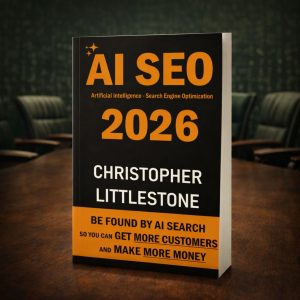
AI SEO 2026 – eBook
$30.00Original price was: $30.00.$19.99Current price is: $19.99. Add to cart


Related Posts (Keep Learning More about this Subject)
- AI SEO vs Traditional SEO: What Still Works in an AI-Driven Search World
- What Is AI Visibility? How Businesses Get Found by AI Search
- What Is an AI Visibility Strategist? How Businesses Get Found by AI Search
- AI Optimization Explained: How to Make Content Machine-Readable for AI Search
- Google Search Is Becoming AI Search: What This Means for Visibility