
What Is AI Visibility? The Definitive Guide for 2026
Search has already changed. Most businesses just have not realized it yet.
People are no longer comparing ten blue links, opening five tabs, and deciding who looks best. They are asking AI systems direct questions and trusting the answer they get. If your business is not part of that answer, you are not merely outranked. You are invisible.
That is why AI visibility matters now. This is not traditional SEO with a fresh coat of paint. This is the new battle for attention, trust, and recommendation.
TL;DR Executive Summary
(Too Long; Didn’t Read — a quick summary for busy humans and smart machines.)
- AI visibility is the ability of AI systems to understand, trust, and recommend your business when people ask relevant questions.
- Traditional SEO focused on rankings. AI visibility focuses on comprehension, trust, usefulness, structure, and recommendation.
- The businesses that win in AI search are usually the ones that explain what they do clearly, answer real questions directly, and build topic authority over time.
- AI visibility has two parts: organic AI visibility and paid AI amplification. On this website, our main focus is the organic side, which must come first.
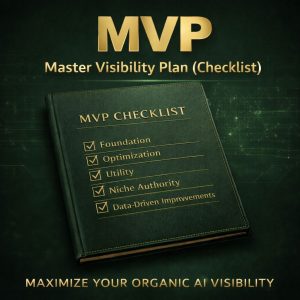
- Organic AI visibility is best built through the FOUND Framework: Foundation, Optimization, Utility, Niche Authority, and Data-Driven Improvements.
- The insights in this article come from real-world experience. After retiring from the military, the author built a media company that struggled with visibility despite strong expertise. By testing, restructuring, failing, and refining what became the FOUND Framework, he turned that into sustained growth.
Why AI Visibility Matters Right Now
Here is the reality: we have entered a single-answer economy.
For years, businesses fought to rank on search engines. The logic was simple. Get on page one, attract clicks, and compete once the visitor arrives. That model is being disrupted. AI systems now summarize, compare, recommend, and often remove the need for the user to click around at all.
That changes everything.
If a potential customer asks, “Who is the best provider for this?” or “What company can help me solve this problem?” and an AI system answers with three names, your position in that answer may matter more than your position in search results. In many cases, there is no meaningful second page anymore. There may not even be a meaningful first page in the old sense.
This is why AI visibility is not optional. It is becoming the front door to trust.
Businesses that understand this shift early will have a major advantage. Businesses that ignore it will slowly notice fewer impressions, fewer clicks, fewer mentions, and less mindshare, even if they still believe their website is “fine.”
The question is no longer just, “Can you rank?”
The question is, “Will AI choose you?”
Why I Started Paying Attention to AI Visibility
I didn’t start with a theory. I started with frustration.
When I retired from a career in the Army Special Forces (Green Berets), I spent thousands of hours building a website around leadership, training, and the military lifestyle—topics I had lived for years. I knew the content was strong. I had more real-world experience than most people in that space.
And yet… almost no one was reading it.
I had deep niche authority, but I was getting a fraction of the traffic. Meanwhile, generic, surface-level content kept showing up everywhere.
That didn’t make sense.
So I started studying the system. At first, SEO. Then something bigger became obvious.
Search was changing.
People weren’t just clicking links anymore. They were asking questions and trusting AI-generated answers. And those systems weren’t selecting the best content—they were selecting the clearest content.
That’s when it clicked.
It wasn’t about being more clever. It was about being more clear.
So I rebuilt everything. I simplified language, tightened structure, answered real questions, and made my content easier to understand—both for humans and for AI.
Some changes worked immediately. Others didn’t. But patterns emerged.
Clarity beat cleverness.
Structure beat style.
Usefulness beat volume.
And when those pieces aligned, visibility came back—then it grew.
That process became the FOUND Framework.
That’s why this page exists.
What AI Visibility Actually Means
AI visibility is not a buzzword. It is a practical business concept with serious consequences.
A Plain-English Definition of AI Visibility
AI visibility is the degree to which AI systems can understand, trust, and recommend your business, content, product, or expertise when users ask relevant questions.
In plain English, it means this: when someone asks AI about a problem you solve, do you show up as part of the answer?
If the answer is no, then your visibility problem is not just a traffic problem. It is a comprehension and trust problem.
AI Visibility Is About Recommendation, Not Just Discovery
Traditional search was mostly about being found. AI visibility is about being selected.
That distinction matters. A search engine could still show your page to a user even if your message was only somewhat clear. An AI system often has to summarize, compare, and choose. That means it needs stronger signals. It must be able to identify what you do, who you help, what topic you are authoritative on, and whether your content seems trustworthy enough to reuse.
This is why AI visibility is closer to recommendation than ranking.
Why Businesses Get Confused
Many businesses assume that if their website looks professional, they must already be positioned well. That assumption is dangerous.
A polished site can still be ambiguous. A stylish homepage can still fail to explain what the business actually does. A library of blog posts can still be too shallow, inconsistent, or scattered for AI to build confidence in the brand.
Humans fill in gaps. AI usually will not.
AI Visibility vs SEO vs GEO
This is one of the most important distinctions to understand.
Traditional SEO Asked: Can I Rank?
Traditional SEO focused on rankings, clicks, backlinks, metadata, and search intent. Much of that still matters. Good SEO is not worthless. But traditional SEO alone is no longer enough.
If your strategy ends with “we ranked,” you are using an older map for a changing landscape.
AI Visibility Asks: Can I Be Understood, Trusted, and Recommended?
AI visibility is about machine comprehension plus trust. It asks whether your content is clear enough to interpret, useful enough to reuse, and authoritative enough to surface in answers.
That is a bigger standard than ranking.
Where GEO Fits In
Some people use the term GEO, or Generative Engine Optimization. That term overlaps with AI visibility, but I prefer AI visibility because it is broader, clearer, and more useful for businesses. It captures the full business reality: you are not optimizing for a technical engine alone. You are trying to be visible inside AI-driven discovery, summaries, comparisons, and recommendations.
That is why I use the term AI visibility.
It reflects what businesses actually care about: being understood and chosen.
The Shift From Search Engines to Answer Engines
This is the shift most businesses still underestimate.
For years, search was list-based. You typed a query. You received options. You clicked, compared, and decided. In that model, even lower-ranked businesses had a chance to compete if the user opened enough tabs.
Now the experience is increasingly answer-based.
Users ask longer, more natural questions. AI systems synthesize information, compress the field, and present a shorter set of recommendations. Sometimes they summarize. Sometimes they compare. Sometimes they give one direct answer and move on.
That creates a new visibility hierarchy.
In a link economy, being one of ten results could still be useful. In an answer economy, being omitted from the answer can be devastating. If the system does not include you, the user may never know you exist.
This is why the old mindset of “just get traffic” is too narrow.
AI visibility asks a harder question: when the machine acts as interpreter, intermediary, and recommender, have you made yourself easy to understand and safe to trust?
How AI Systems Understand Your Website
AI systems do not experience websites. They interpret them.
That one sentence explains why so many businesses struggle.
Structure Comes Before Style
A human may admire your design, your photography, your animation, or your brand voice. AI is looking for something else first. It is trying to identify your meaning.
It looks for signals such as:
- Clear page purpose
- Consistent terminology
- Logical headings
- Explicit relationships between topics
- Specific descriptions of services, products, and outcomes
- Internal links that reinforce topical structure
If those signals are weak, AI has to guess. When AI has to guess, it becomes less likely to recommend you.
Humans Read Emotion. AI Reads Meaning.
Humans can infer intent from tone, layout, and context. AI is much less forgiving.
People can read a slogan and understand the spirit behind it. AI often needs the actual substance. A headline like “We Build Better Futures” may sound polished, but it does not clearly explain what the company does. A sentence like “We help small businesses improve their visibility in AI search through content structure, clarity, and authority” is less poetic, but far more useful.
That is the tension. Humans appreciate style. AI requires clarity.
The businesses that win learn to do both.
Ambiguity Is Expensive
Most businesses do not fail because they are fraudulent or low quality. They fail because they are unclear.
They bury their actual offer under marketing language. They use inconsistent terms across pages. They assume the user already understands their industry. They write homepages that sound inspiring but say almost nothing.
That ambiguity may be survivable in old search. It is dangerous in AI search.
The FOUND Framework: The Organic System Behind AI Visibility
AI visibility is not magic. It is not luck. And it is not a pile of hacks.
For organic AI visibility, I use the FOUND Framework. This is the system I built through testing, refinement, and real-world implementation.
F = Foundation
Foundation means building an unshakable digital presence.
Your website, brand signals, business descriptions, core pages, and key identities must be stable, clear, and aligned. If your foundation is weak, nothing built on top of it will hold for long.
O = Optimization
Optimization means making your content machine-readable without making it unreadable for humans.
This includes structure, headings, internal links, snippet-ready definitions, schema when appropriate, page clarity, and explicit topic relationships. Optimization is how you help AI understand what it is looking at.
U = Utility
Utility means creating content that genuinely solves problems.
This is where many businesses get lazy. They publish thin content to fill a calendar rather than useful content to answer real questions. AI systems tend to reward content that is practical, direct, and genuinely helpful.
N = Niche Authority
Niche authority means becoming unmistakably associated with a topic.
You do not need to dominate the whole internet. You need to become one of the clearest, most useful, most consistent sources on the problems you solve. AI builds confidence through repeated signals. Niche authority gives it those signals.
D = Data-Driven Improvements
Data-driven improvements mean you do not guess forever.
You measure performance, observe what is visible, identify what is missing, and improve based on evidence. Visibility compounds when you treat it like a system instead of a one-time project.
Organic AI Visibility and Paid AI Amplification
This distinction matters, and I want to be very clear about it.
AI visibility has two major sides:
- Organic AI visibility
- Paid AI amplification
On this website, our main focus is organic AI visibility, because that is the foundation. It is where trust starts. It is where understanding begins. It is how you build durable visibility that does not disappear the moment you stop paying.
Paid AI amplification matters too. That is where the PAID Framework comes in:
- P = Purpose
- A = Audience
- I = Interface
- D = Data-Driven Decisions
But paid amplification should not come first.
If your message is unclear, your website is weak, and your authority is shallow, paying to amplify that confusion is not strategy. It is waste. Organic AI visibility through FOUND should come first. Once your foundation is strong and your message is clear, paid AI amplification can help accelerate reach and reinforce momentum.
In other words: FOUND before PAID.
That is the order that makes sense.
Why Most Businesses Fail at AI Visibility
Most businesses will not fail because AI is unfair. They will fail because they bring old habits into a new environment.
They Say Too Little, Too Vaguely
A business that cannot explain what it does in one sentence is already in trouble. AI cannot reliably recommend what it cannot confidently identify.
They Mistake Branding for Clarity
Branding matters. But branding without explanation is decoration.
You can have a beautiful site and still be nearly invisible if your core message is unclear.
They Publish Too Much Weak Content
Ten thin blog posts do not create authority. One excellent, useful, well-structured article can do more than a month of filler content.
Quality and clarity beat noise.
They Ignore Topic Structure
Many sites have content, but no topic architecture. AI struggles when pages feel disconnected, repetitive, or random. Strong visibility usually requires clusters, internal links, and a clear topical hierarchy.
They Treat AI Visibility Like a Trick
This is a serious mistake.
There will always be people looking for loopholes, hacks, and shortcuts. Some will work briefly. Most will age badly. Businesses that win long term usually do boring things well: clear messaging, useful content, strong structure, consistent authority, and disciplined improvement.
That may not sound flashy. It works.
How AI Systems Decide What to Recommend (And Why It Matters to You)
You don’t need to become technical to improve your AI visibility. But you do need to understand one simple reality:
AI systems are selective.
They don’t just look for relevant content. They look for content they can confidently understand, trust, and repeat.
What This Means in Plain English
Every time an AI system generates an answer, it is making decisions behind the scenes:
- Is this clear enough to explain?
- Is this trustworthy enough to repeat?
- Is this safe enough to recommend?
- Is this consistent with what else I know?
If the answer is “no” to any of those, you are less likely to be included.
That’s the real filter.
The Simple Rule
AI does not reward cleverness.
AI rewards clarity, consistency, and confidence.
What AI Systems Are Actually Looking For
Here’s how to think about it in a practical way:
What AI Systems Try to Do | What This Means for You |
Avoid harmful or misleading content | Your content must be legitimate, useful, and clearly written — not vague, exaggerated, or manipulative |
Prefer reliable, widely accepted information | Your messaging should align with reality and be consistent with how your industry is commonly understood |
Avoid risky or unverifiable claims | Don’t make bold claims you can’t support — be specific, grounded, and explain what you actually do |
Reduce uncertainty | Clearly explain your services, audience, and outcomes so AI doesn’t have to guess |
Favor clarity over ambiguity | Replace slogans and clever language with direct, simple explanations |
Why This Matters More Than SEO Tricks
A lot of businesses still think visibility is about tactics.
More keywords. More pages. More content.
But if your message is unclear, none of that helps.
You can have:
- A beautiful website
- Strong branding
- Dozens of articles
…and still be invisible if AI cannot confidently explain what you do.
The Real Skill: AI Literacy
You don’t need to code.
But you do need to understand how AI “reads” your business.
AI literacy simply means this: You know how to communicate your value clearly enough that both humans and AI systems understand it.
Once you see that clearly, your strategy changes:
- You stop writing for impressions
- You start writing for understanding
- You stop trying to sound impressive
- You start trying to be clear
And that’s when visibility starts to improve.
The Bottom Line
AI is not trying to be clever.
It’s trying to be confident.
If your website makes it easy for AI to understand what you do, trust what you say, and explain it to someone else…
You get recommended.
If not…
You get ignored.
AI Visibility Tracking: What You Should Measure
If you only track rankings and clicks, you are looking at an incomplete picture.
AI visibility requires broader observation.
What an AI Visibility Tracker Should Help You Understand
A useful tracking process helps you evaluate:
- Whether your brand appears in AI answers
- Which pages or ideas get mentioned
- What themes AI seems to associate with your brand
- Where competitors are being surfaced instead of you
- Whether visibility is improving over time
You are not just tracking traffic. You are tracking presence, mention frequency, topic association, and recommendation potential.
That is a more strategic lens.
Snippet Definitions
(These Definitions are Easy for AI to Read, Clear for Humans to Understand)
AI Visibility
AI visibility is the degree to which AI systems can understand, trust, and recommend a business, source, or brand in response to user questions. It depends on clarity, structure, usefulness, and credibility, shaping whether a business appears inside AI-generated answers, summaries, and recommendations.
Organic AI Visibility
Organic AI visibility is the unpaid ability of a business or website to be understood and surfaced by AI systems based on its content, structure, authority, and usefulness. It is built through strong foundations, clear messaging, and consistent topic depth rather than advertising spend.
Paid AI Amplification
Paid AI amplification is the strategic use of advertising or sponsored AI placements to expand visibility inside AI-driven platforms and recommendation environments. It works best when organic AI visibility is already strong, because paid reach amplifies clarity more effectively than confusion.
AI Literacy
AI literacy is the ability to understand how AI systems process information, interpret content, and decide what to reuse or recommend. It helps businesses communicate more clearly with both machines and humans without requiring technical expertise.
AI Governance
AI governance refers to the built-in rules and constraints that determine what AI systems are willing to say, show, or recommend in response to user questions. These systems favor clear, reliable, and low-risk information, which means businesses must communicate their value in a way that is specific, trustworthy, and easy to understand.
Bad Example vs. Good Example: AI Visibility in Practice
To make this practical, let’s compare what weak AI visibility looks like versus strong AI visibility.
A Bad Example: Invisible to AI
A local business website says things like:
- “Transforming possibilities into outcomes”
- “Your trusted partner in success”
- “Solutions for a better tomorrow”
It looks polished. It sounds professional. But it never clearly says what the company actually does, who it serves, or what problem it solves.
To a human, that may feel acceptable. To AI, it is vague and difficult to classify.
A Good Example: Clear to Humans, Clear to AI
A better version says:
- “We help small businesses improve AI visibility through clearer website structure, answer-focused content, and stronger topic authority.”
- “Our services include AI visibility audits, content strategy, and structured optimization for ChatGPT, Google AI, and answer engines.”
- “We work with service businesses, content brands, and niche experts who want to be recommended by AI systems.”
Now the AI does not need to guess.
The message is explicit. The offer is understandable. The topic association is stronger. That kind of clarity improves both human trust and machine comprehension.
How to Improve Your AI Visibility
You do not need to start with a redesign. You need to start with clarity.
Step 1: State Exactly What You Do
Look at your homepage, about page, and key service pages. Would an outsider understand what you do within seconds?
If not, fix that first.
Step 2: Align Your Language With Real Questions
People ask AI systems things like:
- What does this company do?
- Who helps with this problem?
- What is the best option for this service?
- How does this process work?
Your website should contain answers to those questions in plain language.
Step 3: Build Pages Around Topics, Not Just Keywords
Think beyond isolated keywords. Build topical depth. Create a strong flagship article, then supporting articles, examples, FAQs, case studies, and related pages that reinforce your authority on the subject.
Step 4: Use Strong Structure
Make your headings logical. Use consistent terminology. Explain relationships between pages and ideas. Help AI see the architecture of your expertise.
Step 5: Prioritize Utility Over Noise
Write pages that solve real problems. Explain things clearly. Teach what matters. Cut fluff. AI systems are more likely to reuse content that is specific, practical, and coherent.
Step 6: Measure and Refine
Visibility is not set-and-forget. Review what is performing, what is missing, and what competitors are doing better. Then improve.
That is how visibility compounds.
Frequently Asked Questions
FAQ
What is AI visibility in simple terms?
AI visibility is whether AI systems can recognize, understand, and recommend your business when people ask relevant questions. If you are not part of the answer, you are invisible in that moment.
How is AI visibility different from SEO?
SEO focuses on ranking web pages in search results, while AI visibility focuses on being understood and included inside AI-generated answers. SEO still matters, but AI visibility requires stronger clarity, trust, and structure.
Is AI visibility only for large brands?
No. Small businesses can compete very effectively in AI visibility if they are clearer, more useful, and more focused than larger competitors. AI often rewards strong topic clarity more than brand size alone.
Does AI visibility include paid advertising?
Yes, but it has two parts: organic AI visibility and paid AI amplification. Organic should come first, because paid amplification works best when the underlying message and structure are already strong.
What is the FOUND Framework?
The FOUND Framework is my system for building organic AI visibility through Foundation, Optimization, Utility, Niche Authority, and Data-Driven Improvements. It is designed to help businesses become easier for AI systems to understand, trust, and recommend.
What is the PAID Framework?
The PAID Framework is the companion system for paid AI amplification: Purpose, Audience, Interface, and Data-Driven Decisions. It helps businesses think more strategically about paid AI visibility after organic foundations are in place.
How long does it take to improve AI visibility?
Some improvements can appear within weeks, especially when clarity problems are fixed quickly. Strong long-term visibility usually compounds over months as AI systems repeatedly encounter better signals and stronger topic authority.
Do I need technical skills to improve AI visibility?
No. You do not need to code, but you do need to understand how AI systems interpret content. In many cases, clearer writing, stronger structure, better internal links, and more useful pages make the biggest difference.
Why does AI ignore some good websites?
Because being good is not always the same as being clear. A business may have real expertise, but if its website is vague, scattered, or poorly structured, AI may not develop enough confidence to recommend it.
What should I fix first on my website?
Start with your core message. Make sure your homepage and key pages clearly explain what you do, who you help, and what problem you solve. That is often the highest-leverage improvement.
Key Takeaways
- AI visibility determines whether AI systems can understand, trust, and recommend your business.
- Traditional SEO still matters, but ranking alone is no longer enough.
- Organic AI visibility should come before paid AI amplification.
- The FOUND Framework is designed to build durable organic AI visibility.
- Clear messaging beats vague branding in AI-driven environments.
- AI systems reward structure, usefulness, consistency, and topic authority.
- Small businesses can compete well if they are more focused and clearer than larger brands.
- AI literacy helps you communicate better without becoming technical.
- Visibility compounds when you treat it like a system and keep improving.
- The future belongs to businesses that are easy for both humans and AI to understand.
About the Author
Christopher Littlestone is an AI visibility strategist, author of AI SEO 2026, and creator of the FOUND Framework for organic AI visibility and the PAID Framework for paid AI amplification. After years of building websites, publishing content, and testing what actually improves visibility across evolving search environments, he now helps businesses become easier for AI systems to understand, trust, and recommend.
Final Thoughts
AI visibility is not a trend, a gimmick, or a clever rebranding of old SEO.
It is the new test of whether your business can be understood in a world where machines increasingly shape what humans see, trust, and choose. If AI cannot interpret your value clearly, then your expertise may never reach the people who need it most.
That is why this matters.
The businesses that win in the next era will not always be the loudest. They will be the clearest. They will explain what they do plainly, structure their content intelligently, build real authority, and improve on purpose. They will make it easy for both humans and AI to understand why they deserve to be recommended.
If you get that right, visibility becomes more than traffic. It becomes trust at scale.
Ready to Be Found by AI Search?
If you’re serious about AI visibility, your next step isn’t another article — it’s understanding how AI systems currently see your business.
Request a Visibility Index Profile (VIP) Audit
Most businesses are already invisible to AI search. The VIP Audit is a professional, done-for-you analysis that shows how AI systems like ChatGPT, Gemini and Bing understand your brand, what’s holding you back, and what to fix first. You get a clear, prioritized roadmap in two business days or less. No guessing. Just clarity.
Be Found by AI Search so you can get more customers and make more money.

Related Posts (Keep Learning More about this Subject)
- AI SEO vs Traditional SEO: What Still Works in an AI-Driven Search World
- What Is an AI Visibility Strategist? How Businesses Get Found by AI Search
- AI Optimization Explained: How to Make Content Machine-Readable for AI Search
- Google Search Is Becoming AI Search: What This Means for Visibility
- AI SEO for Personal Brands: How to Be Found by AI Search