
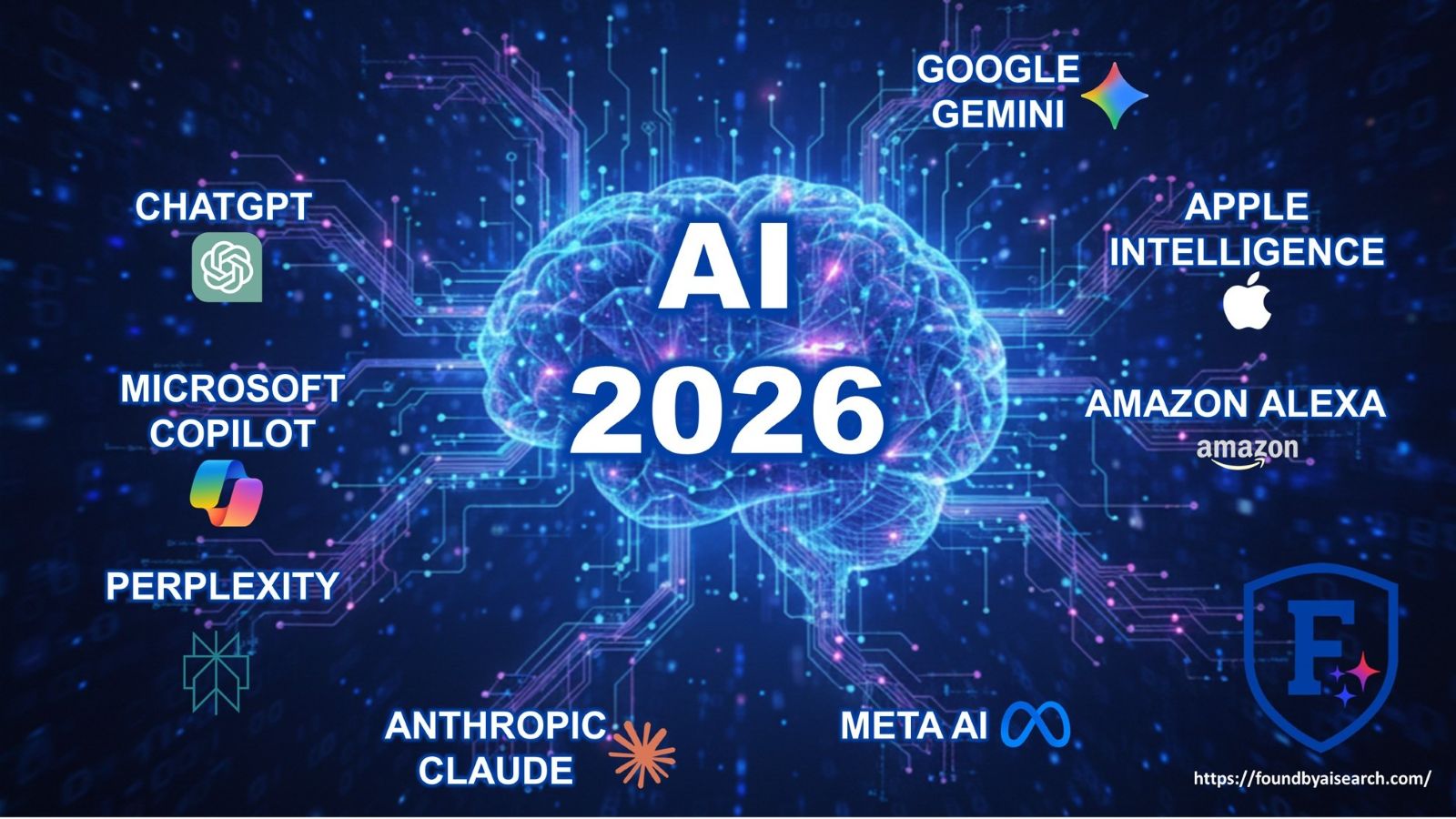
AI Platforms to Understand and Use in 2026
Artificial intelligence is no longer a future trend — it is now the interface people use to find answers, make decisions, and choose who to trust. In 2026, a small number of AI platforms quietly shape what businesses get mentioned, cited, or completely ignored. If your business is not understood by these systems, it is becoming invisible by default.
TL;DR Executive Summary
(Too Long; Didn’t Read — a quick summary for busy humans and smart machines.)
- In 2026, AI platforms are replacing traditional search results with direct answers and recommendations.
- Only a handful of AI systems decide which businesses get mentioned or cited.
- Understanding how these platforms work is now essential for visibility, trust, and growth.
- Clear structure, real expertise, and consistency matter more than backlinks or ad spend.
- This article explains the top AI platforms to understand and use in 2026 — and how to position your business to be found by AI Search.
Why AI Platforms Matter More Than Search Rankings
For over two decades, online visibility meant ranking on Google. If you ranked high enough, people clicked. If they clicked, you had a chance to earn their business.
That model is breaking.
In 2026, people increasingly ask questions instead of searching, and AI systems deliver complete answers. These answers often include only a few brands — sometimes only one.
This means you are no longer competing for page-one rankings.
You are competing to be included in the answer.
AI platforms don’t reward volume, tricks, or keyword repetition. They reward clarity, consistency, and trust. Businesses that understand this shift early gain a lasting advantage.
A Quick Word on Perspective (Without the Hype)
I’m not approaching AI Search as a theorist or a casual observer. As someone who runs a YouTube channel with millions of views and hundreds of thousands of subscribers, owns and operates multiple real-world businesses, and works daily as an AI SEO strategist, I’m seeing the same shift from every angle at once.
AI is no longer optional. It is already shaping how people discover information, decide who to trust, and choose which businesses to contact — and that trend is accelerating. This isn’t speculation; it’s visible in search behavior, platform changes, and the way customers now ask questions.
The goal of this article isn’t to turn you into an AI expert or to suggest that every nuance applies to every business. It’s to give you a working understanding of the major AI platforms, what they’re best at, and how they differ — so you’re not caught off guard as these systems increasingly mediate visibility.
What follows is not hype or prediction. It’s a practical attempt to help business owners understand the terrain they’re already operating in — whether they realize it yet or not.
The Top AI Platforms to Understand and Use in 2026
You don’t need to master every AI tool on the market. But you do need to understand the platforms shaping discovery. These are the systems people trust when asking real questions.
ChatGPT (OpenAI)
ChatGPT is the platform that introduced AI conversation to the mainstream. By 2026, it handles hundreds of millions of user interactions every day.
What it’s known for
- Natural, conversational answers
- Strong reasoning and summarization
- Broad use across personal, educational, and business tasks
Why it matters
When users ask ChatGPT questions like “Who should I trust?” or “What’s the best option?”, the model relies on structured, credible sources. Businesses that are clearly explained and consistently referenced are more likely to be included.
ChatGPT doesn’t rank websites. It chooses sources.
Google Gemini (Including AI Overviews)
Gemini is deeply integrated into Google Search, Maps, Gmail, Android, and YouTube. In 2026, Gemini is not just an AI tool — it is the backbone of Google’s search experience.
What it’s known for
- Massive data integration
- Location-based answers
- AI-generated overviews at the top of search results
Why it matters
Gemini often delivers answers before users ever see traditional search results. If your business is not clearly understood by Google’s systems, you won’t appear — even if your website exists.
Gemini favors:
- Clean site structure
- Strong local signals
- Consistent entity information
Microsoft Copilot (Bing Copilot)
Microsoft Copilot brings AI directly into work environments like Word, Excel, Outlook, Windows, and Bing.
What it’s known for
- Productivity-focused AI
- Business-friendly summaries
- Integration with professional workflows
Why it matters
When professionals ask Copilot questions, it pulls from trusted sources and structured data. Being mentioned inside Copilot responses can influence purchasing and vendor decisions without a single click.
This is AI Search inside the workplace.
Perplexity AI
Perplexity has earned trust by showing citations with every answer. It is often used by researchers, analysts, and decision-makers.
What it’s known for
- Transparent sourcing
- Real-time web retrieval
- High accuracy expectations
Why it matters
Perplexity rewards websites that explain things clearly. If your content is well-structured and authoritative, Perplexity may cite you directly — effectively endorsing your expertise.
This is one of the clearest examples of AI citation as authority.
Anthropic Claude
Claude is widely used in professional, legal, and research environments.
What it’s known for
- Deep comprehension
- Careful, structured reasoning
- Preference for reliable sources
Why it matters
Claude reads more like a careful analyst than a chatbot. Businesses that publish thoughtful, well-organized content perform better than those chasing trends or hype.
Claude rewards depth over noise.
Meta AI (Facebook, Instagram, WhatsApp)
Meta’s AI systems operate behind the scenes of the world’s largest social platforms.
What it’s known for
- Massive social data
- Behavioral understanding
- Conversational AI inside messaging apps
Why it matters
Your social presence, business pages, reviews, and interactions help train Meta’s understanding of your brand. In 2026, discovery increasingly happens inside conversations — not browsers.
If your brand is unclear or inconsistent, Meta’s systems struggle to recommend it.
Apple Intelligence (Siri + On-Device AI)
Apple’s AI focuses on privacy, device-based intelligence, and verified sources.
What it’s known for
- Privacy-first design
- Strong integration with Apple Maps and Siri
- Fewer but more trusted sources
Why it matters
When users ask Siri questions like “Find the best option near me,” Apple relies heavily on structured business data. If your listings and entity signals are weak, you won’t appear.
Apple rewards accuracy over volume.
Amazon Alexa (Generative Commerce)
Alexa connects AI answers directly to purchasing decisions.
What it’s known for
- Voice-first recommendations
- Product comparisons
- Review-driven trust signals
Why it matters
For product-based businesses, Alexa may recommend one option — not ten. Clear descriptions, strong reviews, and structured listings matter more than ever.
This is AI Search tied directly to sales.
What These Platforms Have in Common
Despite their differences, these platforms share core behaviors:
- They prefer clarity over cleverness
- They trust consistent entities
- They avoid vague or confusing sources
- They reward structured, factual explanations
AI does not guess well. It selects what it understands.
Bad Example vs. Good Example — A Clear Contrast
To make this practical, let’s look at two simple examples.
First, a bad example of a business that is not structured for AI Search and is difficult for AI systems to understand, trust, or reference. Then, a good example of a similar business that is properly structured, clear, and easy for AI platforms to include in their answers.
❌ Bad Website / Business Example
Imagine a local service business with:
- A vague homepage filled with buzzwords but no clear explanation of what they actually do
- No dedicated service pages — everything is buried on one long page
- Inconsistent business name, address, or contact information across the web
- No FAQ section answering common customer questions
- No clear proof of expertise, experience, or credibility
To an AI system, this business is confusing.
It cannot confidently determine who they are, what they offer, or why they should be trusted — so it avoids mentioning them altogether.
✅ Good Website / Business Example
Now imagine a similar business that has:
- A clear homepage that plainly explains who they serve and what problem they solve
- Dedicated pages for each service, written in simple, direct language
- A structured FAQ section that answers real customer questions
- Consistent business name, location, and contact details everywhere online
- Clear signals of expertise through examples, explanations, and helpful content
To AI platforms, this business is easy to understand and easy to trust.
As a result, it is far more likely to be referenced, cited, or recommended when users ask relevant questions.
How to Use AI Platforms Instead of Chasing Them
You don’t optimize separately for each platform. You build clarity once.
Practical Checklist
- Explain who you are in plain language
- Clearly define what you offer
- Use structured headings and FAQs
- Keep your business details consistent everywhere
- Publish helpful, problem-solving content
AI rewards businesses that teach well, not those that shout the loudest.
Frequently Asked Questions
What is AI Search in 2026?
AI Search refers to systems that generate direct answers to questions instead of showing a list of links. These systems interpret intent, evaluate trusted sources, and decide which businesses, experts, or explanations to include in their responses. In 2026, AI Search is increasingly shaping how people discover information, compare options, and choose who to trust.
If you want to go deeper, this site explores AI Search in practical detail, and AI SEO 2026 provides a step-by-step framework for being found and referenced by these systems.
How do AI platforms choose which businesses to mention?
They look for clarity, consistency, expertise, and trust signals across websites and public data.
Is traditional SEO still relevant?
Yes, but it now supports AI visibility instead of clicks. Structure and authority still matter.
Do I need to optimize for every AI platform separately?
No. A clear, structured online presence works across platforms.
What role do FAQs play in AI Search?
FAQs help AI understand common questions and match your content to user intent.
Can small businesses compete with big brands in AI Search?
Yes. AI rewards clarity and relevance, not size.
How long does it take to see results?
AI visibility builds over time as systems gain confidence in your content.
Is paid advertising replacing AI Search?
Advertising will exist, but organic AI mentions remain extremely valuable.
Key Takeaways
- AI platforms now control discovery
- Visibility means inclusion, not ranking
- Clear structure beats clever tactics
- Trust signals matter more than volume
- Small businesses can win with clarity
- AI Search is already influencing revenue
Final Thoughts
Every major platform shift creates winners and losers. In 2026, the difference is not budget, size, or technical tricks. It is understandability.
If AI systems understand you, they can recommend you.
If they don’t, they can’t.
Visibility is no longer loud. It’s precise.
Ready to Take the Next Step?
If you’re serious about AI visibility, your next step isn’t another article — it’s understanding how AI systems currently see your business.
Request a Visibility Index Profile (VIP) Audit
Most businesses are already invisible to AI search. The VIP Audit is a professional, done-for-you analysis that shows how AI systems like ChatGPT, Gemini and Bing understand your brand, what’s holding you back, and what to fix first. You get a clear, prioritized roadmap in two business days or less. No guessing. Just clarity.
Be Found by AI Search so you can get more customers and make more money.
-
AI Search
Visibility Index Profile (VIP) – Audit
$399.00Original price was: $399.00.$299.00Current price is: $299.00. Add to cart -
AI Search
Master Visibility Plan (MVP) – Checklist
$49.99Original price was: $49.99.$29.99Current price is: $29.99. Add to cart -
AI Search
AI SEO 2026 – eBook
$30.00Original price was: $30.00.$19.99Current price is: $19.99. Add to cart


Related Posts (Keep Learning More about this Subject)
- AI SEO vs Traditional SEO: What Still Works in an AI-Driven Search World
- What Is AI Visibility? How Businesses Get Found by AI Search
- What Is an AI Visibility Strategist? How Businesses Get Found by AI Search
- AI Optimization Explained: How to Make Content Machine-Readable for AI Search
- Google Search Is Becoming AI Search: What This Means for Visibility