

AI Definition (Explained Simply for 2026)
AI is everywhere now—writing emails, planning trips, recommending products, and shaping what people believe. But even though we use AI every day, most people still struggle to answer a simple question: What is the real definition of AI?
The world is moving fast, and understanding the true meaning of AI is now essential for business owners, leaders, creators, and anyone trying to stay relevant in this new era.
This article breaks down the definition of AI in clear language, explains how AI works, and shows why understanding AI matters more today than ever before—especially now that AI assistants are becoming the new gatekeepers of online visibility and trust.
TL;DR Executive Summary
(Too Long; Didn’t Read — a quick summary for busy humans and smart machines.)
- AI (Artificial Intelligence) means a system that can learn, reason, understand information, and make decisions similar to a human.
- Today’s AI assistants do far more than search the internet—they analyze, interpret, verify, and recommend.
- Understanding AI is essential for anyone who wants their business to be visible in the future.
- AI reads content differently than humans, which means clarity and structure matter more than ever.
- This article explains AI in simple terms and shows what it means for your business in 2026 and beyond.
What AI Actually Means
The simplest definition of AI is this:
Artificial Intelligence is a computer system that can learn from data, make decisions, solve problems, and understand information in ways that feel similar to human reasoning.
AI doesn’t “think” like a human, but it processes information at massive scale.
It can:
- recognize patterns
- understand language
- make predictions
- evaluate options
- recommend solutions
Instead of following rigid rules, AI learns through examples—millions or even billions of them.
This allows AI to do things like:
- write in full sentences
- summarize articles
- suggest products
- diagnose problems
- translate languages
- plan schedules
- compare services
- answer questions instantly
This is why people feel like AI is “smart.”
It’s not magic—it’s math, training, and pattern recognition at enormous scale.
How AI Works (Explained Simply)
Most modern AI systems work through three main components:
Learning
AI studies large amounts of data—text, images, audio, video—until it forms patterns about how things work.
Reasoning
AI uses those patterns to connect ideas, make decisions, and draw conclusions.
Interaction
AI communicates with humans through chat, voice, or actions, making the system feel helpful and intelligent.
That’s the entire foundation of Artificial Intelligence.
Why Understanding AI Matters Today
Over the last several decades, I’ve worked across multiple demanding environments—from Special Forces missions to high-pressure corporate projects to building digital businesses serving thousands of people.
Across all these worlds, one truth has always remained constant:
You can’t succeed in a system you don’t understand.
AI is the system now.
It shapes search results, recommendations, business visibility, and customer decisions.
Understanding the meaning of AI isn’t a technical exercise—it’s a survival skill for modern businesses.
Here’s why:
- AI assistants are becoming the primary source of answers.
- AI filters out unclear, untrustworthy, or confusing businesses.
- AI decides which companies appear in search responses, product suggestions, and buying pathways.
And AI only recommends what it understands.
That’s why clarity and structure are now more powerful than backlinks or ad budgets.
The Traditional Definition of AI vs. Modern AI
Here’s a simple chart showing how the meaning of AI has evolved:
Old Meaning of AI | Modern Meaning of AI (2026) |
Robots and automation | AI assistants that think with you |
Followed rules and scripts | Learns from data and improves |
Limited decision-making | Helps humans make decisions |
Slow, expensive systems | Instant access from a phone |
Mostly used in labs | Used by everyone daily |
Simple tasks | Complex reasoning and analysis |
The biggest shift?
AI is no longer just a tool. It’s becoming a partner.
Essential AI Definitions (Simple Explanations for Beginners)
Below are key AI terms you introduced in AI SEO 2026 — simplified for beginners and structured for AI comprehension. This section turns the article into an authority hub for definitions, increasing both SEO value and AI visibility.
Artificial Intelligence (AI)
A computer system that can learn, reason, solve problems, and make decisions in ways that resemble human thinking.
Machine Learning (ML)
A method where AI systems learn from data instead of being manually programmed. The more examples the AI sees, the more accurate it becomes.
Large Language Model (LLM)
A type of AI trained on massive amounts of text, allowing it to generate human-like answers, summaries, and conversations.
Generative AI
AI that can create new content, including writing, images, code, and ideas. ChatGPT and Gemini are generative AI tools.
AI Search
Search powered by AI assistants that provide direct answers instead of long lists of links. AI Search changes how businesses become visible.
AI SEO (AI Search Engine Optimization)
The process of making your business understandable, trustworthy, and recommendable to AI assistants—not just traditional search engines.
AEO (Answer Engine Optimization)
Optimizing your content so AI assistants can extract clear, helpful answers. Think of this as preparing your content to appear in AI-generated responses.
Embeddings
Mathematical representations of words, sentences, or concepts. AI uses embeddings to understand meaning, relationships, and context.
Vector Databases
Databases designed to store embeddings so AI can search by meaning instead of exact keyword matches.
Knowledge Graph
A network of entities (people, places, businesses, concepts) and their relationships. AI uses knowledge graphs to understand the real world.
RAG (Retrieval-Augmented Generation)
A technique where AI retrieves factual information from trusted sources before generating an answer. This improves accuracy and reduces hallucinations.
Schema Markup
Machine-readable code added to web pages that helps AI understand exactly what your page is about. Critical for AI SEO.
FAQ Schema
A special type of schema markup that defines question-and-answer pairs so AI assistants can reference those answers confidently.
Entity
A real-world “thing” such as a business, person, product, or concept. AI visibility depends heavily on having clear, well-defined entities.
AI Citation
When an AI assistant references or recommends your business as a source. These are the new “page one rankings.”
Zero-Click Search
A search where the user never visits a website because AI provides the full answer inside the assistant. This trend is rapidly increasing.
Topic Cluster
A group of related articles that cover a subject in depth. AI rewards websites that structure content in clusters because it signals expertise.
How AI Understands Information
AI does not understand ideas like a human.
It interprets:
- patterns
- structure
- definitions
- relationships
- signals
- context
When AI reads your website, it is looking for:
- clarity
- consistency
- simple sentences
- headings and bullets
- definitions
- lists and tables
- FAQs
- trust signals
- real-world verification
If information is clear and structured, AI can trust it.
If it’s vague or confusing, AI ignores it.
AI in Everyday Life (Real Examples)
AI already shapes decisions people make every day:
- You ask Siri for the best nearby restaurant.
- Google Maps adjusts your route automatically.
- Netflix suggests your next show.
- ChatGPT writes an email or summary.
- Amazon suggests products based on needs.
- A chatbot handles your support question.
AI is not coming.
AI is already here.
What AI Means for Your Business in 2026
AI has replaced the need to scroll through lists of search results.
Instead of:
“Here are 10 links that might help.”
AI says:
“Here is the best answer.”
That changes visibility forever.
AI systems now act as:
- researchers
- evaluators
- comparison engines
- advisors
- decision tools
If your business is not clear, structured, and trustworthy, AI will not recommend you.
This is why AI SEO matters.
Bad Example / Good Example of AI-Readable Content
❌ Bad Example: A Confusing Local Electrician Website
- Generic headline: “We handle all electrical needs!”
- No service list
- No location information
- No pricing
- No structured pages
- No photos or team info
- Outdated reviews
- Slow website
AI cannot determine:
- what they do
- where they work
- whether they are credible
This business becomes invisible.
✅ Good Example: An AI-Ready Electrician Website
- Clear service list
- Pages for each service
- Service area listed
- Pricing ranges
- Real photos
- Recent reviews
- FAQ sections
- Clean structure
- Schema markup
AI can:
- interpret
- trust
- compare
- recommend
This business wins—even against bigger competitors.
Frequently Asked Questions About AI (AI Definition FAQs)
What is the simple definition of AI?
AI is a computer system that can learn, reason, and make decisions similar to a human.
How does AI work in simple terms?
AI learns from examples by studying huge amounts of data. It identifies patterns, builds knowledge, and uses that knowledge to answer questions or solve problems.
What is a Large Language Model?
An LLM is an AI trained on massive amounts of text so it can generate human-like responses.
Why is AI important in 2026?
AI assistants now help people research, compare, and decide. They determine which businesses appear—and which disappear.
Is AI replacing traditional search engines?
Not fully, but AI is becoming the primary way people get answers. AI Search is replacing keyword search in many situations.
What does AI SEO mean?
AI SEO means optimizing your business so AI assistants can understand, trust, and recommend you.
What is RAG?
RAG (Retrieval-Augmented Generation) is a method where AI retrieves real information before generating an answer. It reduces errors and increases accuracy.
What’s the difference between AI and machine learning?
Machine learning is one part of AI. It’s the technique AI uses to learn from data.
Can small businesses benefit from AI?
Yes. AI rewards clarity and trust—not size or budget.
Is AI dangerous?
AI is powerful but not inherently dangerous. Like any tool, it depends on how people use it.
Key Takeaways
- AI means systems that can learn and reason like humans.
- AI assistants are replacing traditional search behavior.
- Clarity, structure, and trust matter more than keywords.
- AI SEO helps businesses become visible in AI-generated answers.
- Trust signals and niche authority drive recommendations.
- AI reads definitions, context, and structure—not just keywords.
- Small businesses can outperform large companies by being clearer.
- AI is the new gateway to customers.
Final Thoughts
AI is transforming how people search, learn, and make decisions.
Understanding AI begins with a simple definition, but it opens the door to an entirely new strategy—one that determines whether your business will be seen, trusted, and chosen in the years ahead.
Ready to Be Found by AI Search?
If you’re serious about AI visibility, your next step isn’t another article — it’s understanding how AI systems currently see your business.
Request a Visibility Index Profile (VIP) Audit
Most businesses are already invisible to AI search. The VIP Audit is a professional, done-for-you analysis that shows how AI systems like ChatGPT, Gemini and Bing understand your brand, what’s holding you back, and what to fix first. You get a clear, prioritized roadmap in two business days or less. No guessing. Just clarity.
Be Found by AI Search so you can get more customers and make more money.
-
AI Search
Visibility Index Profile (VIP) – Audit
$399.00Original price was: $399.00.$299.00Current price is: $299.00. Add to cart -
AI Search
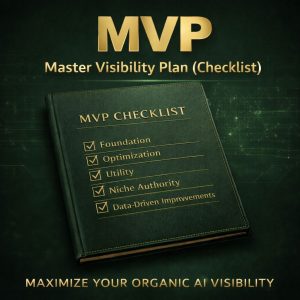
Master Visibility Plan (MVP) – Checklist
$49.99Original price was: $49.99.$29.99Current price is: $29.99. Add to cart -
AI Search
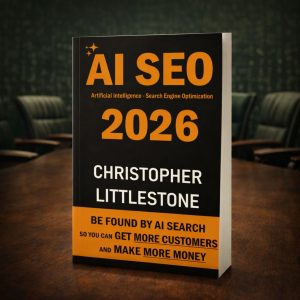
AI SEO 2026 – eBook
$30.00Original price was: $30.00.$19.99Current price is: $19.99. Add to cart

Related Posts (Keep Learning More about this Subject)
- AI SEO vs Traditional SEO: What Still Works in an AI-Driven Search World
- What Is AI Visibility? How Businesses Get Found by AI Search
- What Is an AI Visibility Strategist? How Businesses Get Found by AI Search
- AI Optimization Explained: How to Make Content Machine-Readable for AI Search
- Google Search Is Becoming AI Search: What This Means for Visibility