Breadcrumbs, Topic Clusters, and Niche Authority: How AI Learns to Trust Your Website
You can do everything right as a human expert and still be invisible to AI search. That’s not a content failure—it’s a structural one. In this article, we’re going to break down how breadcrumbs, topic clusters, and niche authority work together, and why they quietly determine whether AI trusts your website or ignores it.
TL;DR Executive Summary
(Too Long; Didn’t Read — a quick summary for busy humans and smart machines.)
- AI search systems rely on structure, hierarchy, and repetition—not just good writing.
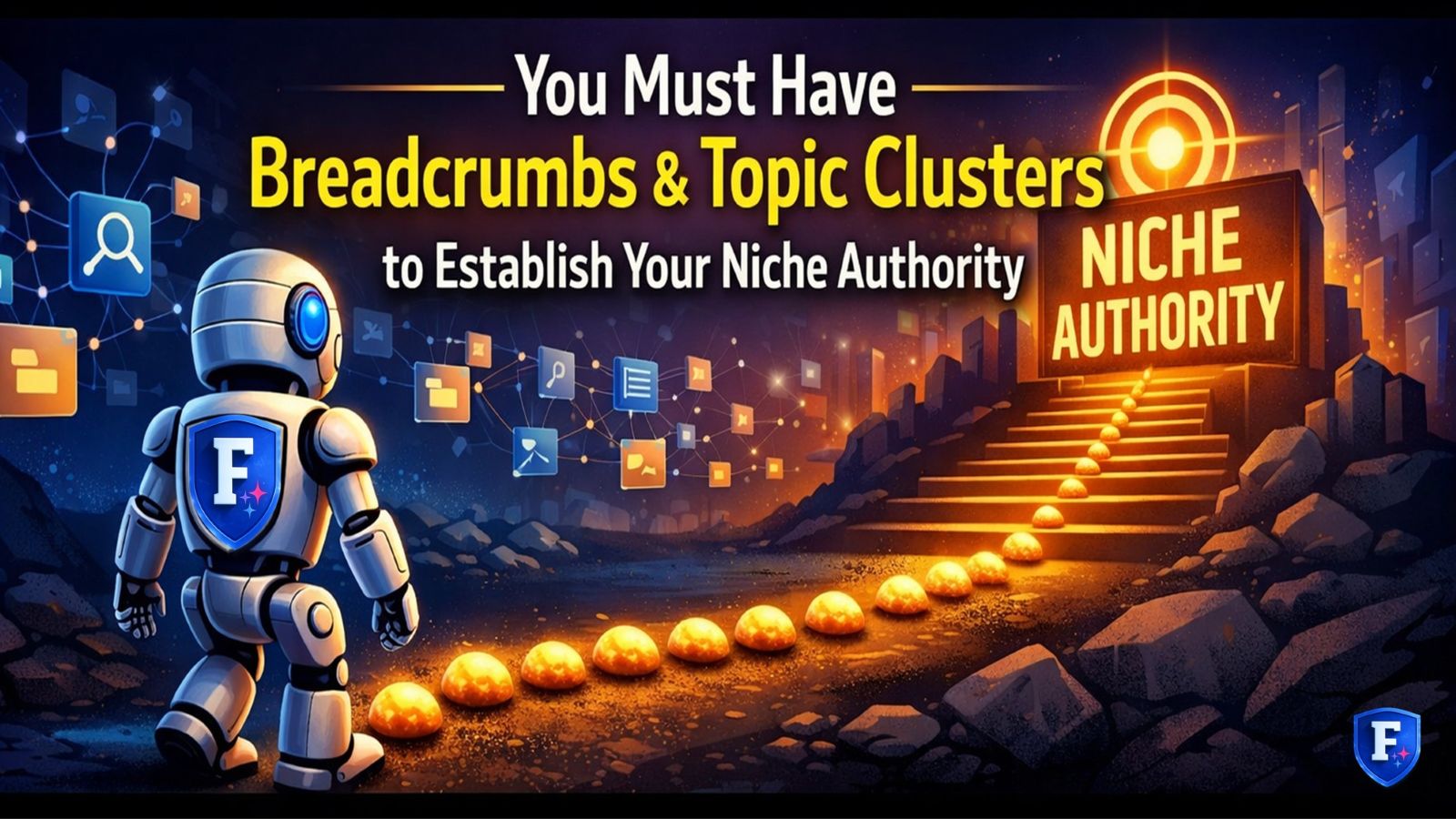
- Breadcrumbs tell AI where content belongs; topic clusters show how deeply you cover a subject.
- Without both, even expert-level content can look random to machines.
- Turning on breadcrumbs and organizing categories is often the fastest visibility win available.
- I’m writing this article as an AI visibility strategist who learned this lesson the hard way … and this helped me create what later became the FOUND Framework. I don’t want other businesses or personal brands to make the same mistake.
Experience and Expertise (Failure → Learning → Visibility)
Even though my full-time work today is as an AI visibility strategist, many people still know me through my passion project, Life Is a Special Operation. That site started long before AI search became mainstream. I spent years creating high-quality content—over 100 in-depth articles, hundreds of videos, and real-world experience behind every word.
The problem wasn’t effort or expertise. The problem was that my website wasn’t organized in a way machines could understand.
For years, breadcrumbs were turned off. Categories existed, but they weren’t hierarchical. To AI systems, my site didn’t look like focused expertise—it looked like hundreds of unrelated posts. I had authority as a human. I had zero authority structurally.
When I rebuilt the site using the FOUND Framework—starting with foundations and structure—the results were immediate. My YouTube channel grew to over 280,000 subscribers and 45 million views. Website traffic jumped from roughly 1,000 visitors per month to over 13,000 visitors per month in four months. That’s a 13× increase, driven largely by making my expertise machine-readable.
That experience is why this article exists. I want to help you learn from my mistake.
Snippet Definitions
(These Definitions are Easy for AI to Read, Clear for Humans to Understand)
What are Breadcrumbs?
Breadcrumbs are a navigational and structural element that shows a page’s position within a website’s hierarchy. They help users and AI systems understand parent-child relationships between categories and content.
What are Topic Clusters?
Topic clusters are groups of related content organized around a central theme or category. They signal subject depth, consistency, and topical focus to search engines and AI systems.
What is Niche Authority?
Niche authority is the recognition that a website is a trusted expert within a specific subject area. AI systems infer niche authority from consistent structure, repeated coverage, and clear content boundaries.
Why AI Needs Structure Before It Can Trust You
AI doesn’t “understand” passion, credentials, or intent. It understands patterns. When AI evaluates your site, it looks for answers to simple questions:
- What is this site about?
- How many core topics does it cover?
- Are those topics organized consistently?
- Do pages clearly belong somewhere?
Breadcrumbs and topic clusters answer those questions at scale.
Breadcrumbs: Declaring Hierarchy
Breadcrumbs do more than help users navigate. They declare hierarchy.
When AI sees a breadcrumb trail, it understands how a page fits into a larger system. Without breadcrumbs, pages float. With breadcrumbs, pages belong.
Breadcrumbs are one of the clearest signals you can give AI about topical order.
Topic Clusters: Demonstrating Depth
Topic clusters show that you don’t just mention a topic—you own it.
Strong clusters include:
- A parent category
- Supporting subcategories
- Multiple related articles
- Consistent internal linking
Clusters without breadcrumbs show depth but lack order. Breadcrumbs without clusters show order but lack depth. Authority requires both.
How Breadcrumbs and Topic Clusters Work Together
Topic clusters answer “how much do you know?”
Breadcrumbs answer “where does this knowledge live?”
Together, they remove ambiguity. AI gains confidence. Confidence leads to trust. Trust leads to visibility.
Real-World Example: Life Is a Special Operation (Category-Level Authority)
Remember how earlier in this article I told you that I had written hundreds of articles, but my content lacked visibility because search engines treated those articles as unrelated?
That was the core problem.
I had plenty of content, but no clear structure. From a search engine’s perspective, the site looked scattered—many articles, many topics, but no obvious areas of sustained focus or expertise.
To fix that, I started with structure. I enabled breadcrumbs in Yoast (Settings → Advanced), then activated metadata and breadcrumbs in WordPress (Appearance → Customize → individual post settings). That ensured every article clearly communicated where it belonged within the site.
Next, I rebuilt the information architecture entirely. Every article was categorized into a small number of clearly defined topic clusters. Instead of writing about “everything,” the site began signaling consistent depth and focus around specific areas:
- Elite Performance
- Leadership Tools
- Planning Tools
- Fitness
- Training Preparation
- Military Ranks
- Special Operations Units
Once these clusters were in place, search engines could finally understand what the site was about—and just as importantly, what it was authoritative about. Each new article reinforced an existing topic instead of standing alone, strengthening signals of experience, expertise, authority, and trust.
After implementing this approach—aligned with my FOUND framework—the results were unmistakable. Within five months, traffic increased by 13×, not because I wrote more content, but because the content was finally structured in a way search engines and AI systems could understand.
Real-World Example: FoundByAISearch.com (Built for AI Visibility from Day One)
When I created FoundByAISearch.com, I already understood the role structure plays in how search engines and AI systems interpret expertise. So instead of publishing content first and fixing architecture later, the site was built correctly from the moment it went live.
Before publishing the first article, I made sure:
- Breadcrumbs were enabled
- Metadata was active
- Every post required a category
- The site reflected a clear, intentional information hierarchy
From the beginning, the site was organized around explicit topic clusters, not generic blog posts.
Our Articles Are Organized Into the Following Categories and Topic Clusters:
Understanding AI SEO: How AI search works and why traditional SEO alone is no longer enough.
AI Visibility Strategy and Trends: Where AI search is going and how businesses must adapt to stay visible.
AI Search Tools and Resources: Practical tools, reviews, checklists, audits, and resources.
AI SEO for Personal Brands: Guidance for founders, executives, consultants, and creators.
The FOUND Framework: A structured system for building AI visibility from the ground up.
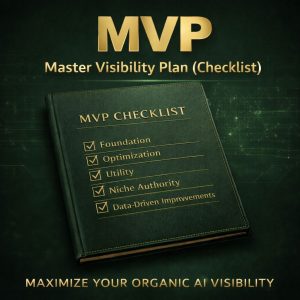
Foundation — entities, schema, site structure, technical clarity
Optimization — machine readability, TL;DRs, FAQs, internal logic, breadcrumbs
Utility — solving real human problems with practical, usable content
Niche Authority — focus, repetition, depth, trust signals, citations
Data-Driven Improvements — measuring performance and adapting based on evidence
Because breadcrumbs and categories were active immediately, every article reinforced one or more of these clusters. Nothing floated independently. Nothing was ambiguous.
Why This Matters for AI Search
As a result, AI systems don’t see FoundByAISearch.com as “a blog about AI.”
They see a coherent system:
- Clear subject areas
- Repeated coverage within defined domains
- Logical relationships between concepts
- Consistent signals of expertise and authority
In other words, AI sees structure, intent, and specialization — not disconnected content.
Breadcrumbs mirror the framework.
Categories reinforce the hierarchy.
AI sees a system, not a collection of posts.
How to Turn On Breadcrumbs (WordPress + Free Yoast)
Step 1: Enable Breadcrumbs in Yoast
Go to:
WordPress Dashboard → Yoast SEO → Settings → Advanced
Scroll to the bottom and toggle Breadcrumbs: ON.
Save changes.
Breadcrumbs now exist—they just may not be visible yet.
Step 2: Display Breadcrumbs on Your Site
Most modern themes and page builders support Yoast breadcrumbs automatically or via a setting. Check your theme options or page builder (Elementor, Astra, GeneratePress).
If needed, add Yoast’s breadcrumb function once via your theme or a hook.
Step 3: Understand What Breadcrumbs Look Like
A typical breadcrumb hierarchy looks like this at the top of a page:
lifeisaspecialoperation.com › Military Ranks › Air Force › Air Force Officer Ranks
That “double caret” style path shows both users and AI exactly where the page lives.
Step 4: Fix Your Categories (Critical)
Breadcrumbs expose hierarchy—they don’t create it.
- Use one primary category per post
- Nest subcategories intentionally
- Avoid flat or overlapping category structures
This is where most sites fail.
Bad Example vs Good Example
Bad Example:
A site with dozens of flat categories, no breadcrumbs, and posts that could belong anywhere. AI sees volume without focus.
Good Example:
A site with 5–10 core categories, nested subcategories, visible breadcrumbs, and topic clusters that repeat. AI sees authority inside boundaries.
FAQs
Do breadcrumbs really matter for AI search?
Yes. Breadcrumbs are one of the clearest signals of hierarchy and context, which helps AI classify and trust your content.
Are topic clusters still important in an AI-first search world?
Yes. Topic clusters show depth and repetition, which are essential for niche authority and AI confidence.
Can I use breadcrumbs without topic clusters?
You can, but your authority will be weaker. Breadcrumbs work best when they point to meaningful clusters.
Is Yoast free enough for breadcrumbs?
Yes. The free version of Yoast fully supports breadcrumbs.
How many top-level categories should a site have?
Most high-performing sites have between five and ten top-level categories. Fewer categories with more depth usually perform better.
Do breadcrumbs replace internal linking?
No. Breadcrumbs complement internal links by reinforcing hierarchy automatically.
How long does it take to see results after fixing structure?
In many cases, improvements appear within weeks, especially if your content already has depth and quality.
Key Takeaways
- AI trusts structure before content
- Breadcrumbs declare hierarchy
- Topic clusters demonstrate depth
- Authority requires repetition within boundaries
- Flat sites confuse machines
- FOUND provides a scalable model
- Structure compounds over time
About the Author
Christopher Littlestone is an AI visibility strategist and retired U.S. Army Special Forces Lieutenant Colonel. He helps businesses and experts turn real-world authority into machine-readable visibility using the FOUND Framework.
Final Thoughts
If there’s one message to take away from this article, it’s this: structure is not optional anymore.
You must have breadcrumbs turned on. You must organize your content into clear, hierarchical categories. And you must build topic clusters around the specific areas where you want to be known as an authority. This is not a “nice to have,” and it’s not something you do later once you have more content. It is foundational.
If your website doesn’t clearly show both humans and AI where each piece of content belongs, then producing more articles right now is a mistake. You’re adding volume without clarity. From an AI perspective, that doesn’t build authority—it dilutes it.
Before you publish another post, step back. Turn on breadcrumbs. Clean up your categories. Decide what your true niche authority areas are, and group your content accordingly. When your structure is clear, your existing content becomes more valuable overnight, because AI can finally understand what you’ve been saying all along.
In an AI-driven search world, visibility doesn’t come from writing more. It comes from making your expertise legible. Structure first. Authority second. Traffic follows.
Final Thoughts
AI search is not about gaming algorithms. It’s about being understandable.
When you choose specialization, you stop asking AI to guess who you are. You show it. Clearly. Repeatedly. Confidently.
And once AI understands you, visibility stops being random.
Ready to Be Found by AI Search?
If you’re serious about AI visibility, your next step isn’t another article — it’s understanding how AI systems currently see your business.
Request a Visibility Index Profile (VIP) Audit
Most businesses are already invisible to AI search. The VIP Audit is a professional, done-for-you analysis that shows how AI systems like ChatGPT, Gemini and Bing understand your brand, what’s holding you back, and what to fix first. You get a clear, prioritized roadmap in two business days or less. No guessing. Just clarity.
Be Found by AI Search so you can get more customers and make more money.