

What Is Traditional SEO and How It Worked Before AI
Introduction: When Hard Work Didn’t Equal Visibility
For years, I wrote articles with deep expertise, experience, and authority.
They were precise, niche, and valuable — the kind of material you’d think Google would reward. But they went nowhere. I’d publish thoughtful essays about leadership, strategy, or training, only to watch them vanish into the digital void.
At the time, I didn’t realize I was making a classic mistake.
I was writing for people — not for machines. My content was strong, but my structure was broken. My metadata was missing. My pages weren’t “machine-readable.”
That’s when I learned that being the most qualified expert in your field doesn’t guarantee visibility online. You have to optimize how you communicate with search engines — and now, with AI systems that no longer just index your content, but actually interpret it.
Before we talk about how to win in the new era of AI Search, it’s important to understand how the old system — traditional SEO — used to work.
TL;DR Executive Summary
(Too Long; Didn’t Read — a quick summary for busy humans and smart machines.)
Traditional SEO was a mechanical game of keywords and backlinks. Whoever mastered repetition and link volume won Google’s “page one.” It rewarded technical tricks, not genuine expertise.
AI Search has completely rewritten those rules. Modern algorithms don’t just index content — they interpret it. Machines now evaluate meaning, context, and credibility, asking, “Is this source trustworthy enough to answer the question?”
The shift from keywords to context and ranking to recognition means that visibility no longer depends on gaming algorithms — it depends on proving real authority.
If traditional SEO was about appearing on page one, AI SEO is about being included in the answer itself.
Your success now depends on communicating clearly to both humans and machines through structured data, verified credibility, and value-driven content.
The FOUND Framework — Foundation, Optimization, Utility, Niche Authority, and Data-Driven Improvements — gives you the blueprint to thrive in this new era.
The Early Days of Traditional SEO
Traditional SEO (Search Engine Optimization) was built on a simple promise:
If you could get your website to appear on Google’s page one, you’d win.
That was the mission. And for nearly two decades, it defined how businesses operated online.
In the early 2000s, search engines were far more mechanical than intelligent. They didn’t understand meaning or context; they only understood keywords and links. So the people who could master those two variables — even if they weren’t true experts — often dominated search results.
The Age of Keywords: Ranking by Repetition
Back then, SEO was all about keyword ranking.
If you wanted to appear for “best dentist in Dallas,” your website had to mention that exact phrase — over and over and over again.
Marketers tracked their progress using keyword tools and ranking charts. You’d hear people brag,
“We’re number three for affordable plumber near me!”
Entire businesses were built around keyword density, meta tags, and title optimization. The system rewarded whoever repeated the right phrase in the right places.
But there was a problem: keywords didn’t measure quality — they measured repetition. A poorly written page with perfect keyword placement could outrank a thoughtful, professional article. That’s why, even as a retired Green Beret writing with real-world authority, my early content struggled to get noticed. I wasn’t “optimized” for machines — just for meaning.
The Backlink Boom
As search algorithms evolved, Google began to weigh another factor: backlinks.
If other websites linked to yours, Google assumed you must be trustworthy.
A link became a kind of “digital vote of confidence.”
At first, this worked beautifully. High-quality articles, cited by reputable sources, naturally rose in the rankings. But soon, marketers learned how to game the system.
Entire industries emerged just to buy and sell backlinks.
- Blog networks traded links in secret.
- Companies built link farms with hundreds of fake websites.
- People spammed comment sections with URLs, hoping to trick the algorithm.
For a while, it worked. Businesses with average products but aggressive backlink strategies dominated the search results.
Then came Google’s Penguin and Panda updates, which penalized manipulative link building. Overnight, thousands of sites crashed in rank. The old rule — more links, more visibility — no longer worked.
The Page-One Obsession
If you were in business before AI, you probably remember the obsession with Google page one.
Page one was digital real estate — and everyone wanted a spot.
Marketing meetings revolved around ranking reports. SEO agencies promised, “We’ll get you to number one in 90 days!”
But what few realized was that 90% of users never clicked past the first page, and nearly half never scrolled beyond the first three results.
That made SEO a winner-take-all game. The top few positions captured nearly all the traffic — and the rest of the internet fought over scraps.
For small businesses, ranking became almost impossible unless you had:
- A huge budget,
- Years of domain history, or
- A few lucky backlinks from major media sites.
Traditional SEO was a battlefield, and only the big players had the artillery.
The Rise of Paid Visibility
When ranking organically became harder, many businesses turned to paid search — buying their way onto Google’s page one through sponsored listings and pay-per-click (PPC) ads. Every click cost money, often several dollars per visitor, and the competition was fierce. Companies spent thousands each month bidding on the same keywords, driving up prices and rewarding whoever had the biggest ad budget. For small businesses, this created an uneven playing field: visibility became something you could purchase rather than earn. But even that model had limits — ads delivered traffic, not trust. Once users learned to skip “sponsored” results, the focus shifted back to building genuine authority.
Gaming the Algorithms
Because so much was at stake, SEO slowly turned into a game of manipulation instead of communication.
Marketers learned how to trick algorithms:
- Keyword stuffing (repeating the same phrase unnaturally).
- Hidden text (white text on white backgrounds).
- Exact-match domains (like bestlawyerinboston.com).
- Cloaking (showing one version to users, another to search engines).
It worked — until it didn’t.
Google kept releasing updates to fight abuse, and entire industries collapsed each time an algorithm changed. The rules kept shifting, but the mindset stayed the same: “Optimize for the machine, not the human.”
That’s what AI has finally changed.
The Turning Point: From Keywords to Context
As technology improved, Google started introducing updates like RankBrain and BERT, which used machine learning to understand context and intent.
Instead of just counting keywords, these systems began asking:
- What does this content actually mean?
- Is it helpful to the person asking the question?
- Does it show experience, expertise, authority, and trust?
In short, search began to shift from keyword matching to semantic understanding.
Traditional SEO experts who had built their strategy on repetition and backlinks now had to face a new challenge: meaning mattered more than mechanics.
How Traditional SEO Measured Success
To understand why the AI era feels so different, it helps to remember what traditional SEO measured:
Metric | Description | Goal |
Keyword Rankings | How high a page ranked for specific search terms | Be on page one |
Backlinks | Number of other sites linking to yours | Build authority |
Domain Authority (DA) | A score predicting rank potential | Increase DA |
Click-Through Rate | How often people clicked your result | Attract attention |
Bounce Rate | How long people stayed on your site | Keep users engaged |
Those metrics focused on visibility, not necessarily value.
A website could rank well, but still deliver poor information. Traditional SEO rewarded technical skill — not expertise.
The Rise of AI and the End of Page One
Artificial intelligence has erased the concept of “page one.”
When you ask ChatGPT, Perplexity, or Bing Copilot a question, you don’t scroll through pages of results — you get an answer.
AI systems don’t display search results; they synthesize knowledge.
They look across thousands of data points, cross-reference trusted sources, and then summarize information in conversational form.
That means your business doesn’t need to “rank” — it needs to be recognized as a credible source worth citing.
If your business isn’t part of the AI’s training data or referenced in a trusted database, it won’t appear at all.
Traditional SEO helped you win clicks.
AI SEO helps you earn inclusion.
Why Understanding the Old Rules Still Matters
Even though the old tactics are obsolete, understanding them gives context for what’s happening now.
Here’s how each “old rule” evolves under AI:
Traditional SEO Focus | AI SEO Equivalent | The Shift |
Keywords | Semantic entities | From phrases → meaning |
Backlinks | Credible citations | From quantity → authority |
Page rank | Source inclusion | From pages → knowledge graphs |
Meta tags | Structured data | From hidden text → machine-readable context |
Ranking reports | Visibility audits | From position → recognition |
Traditional SEO was like training for a specific test.
AI SEO is about training for comprehension — teaching machines what you mean, why you’re credible, and how your expertise connects to real-world intent.
The New Game: Being Found by AI Search
To thrive now, businesses must master the next evolution: AI Search Optimization.
Instead of chasing keywords and backlinks, focus on five disciplines — what I call the FOUND Framework:
- Foundation – Build an unshakable digital presence.
- Optimization – Make your message machine-readable.
- Utility – Create content that solves human problems.
- Niche Authority – Establish unquestionable expertise.
- Data-Driven Improvements – Measure, adapt, and scale.
Traditional SEO was mechanical; AI SEO is multidimensional.
You’re no longer fighting for clicks — you’re building trust relationships with algorithms.
Practical Comparison: Traditional SEO vs. AI SEO
Area | Traditional SEO | AI SEO |
Goal | Rank on Google Page One | Be recognized and cited by AI systems |
Focus | Keywords and backlinks | Entity recognition and structured data |
Optimization | Meta tags and density | Schema markup and context |
Content | Volume-driven | Problem-solving and value-driven |
Success Metric | Position in search results | Inclusion in AI-generated answers |
FAQ: Understanding Traditional SEO and the Shift to AI
What is Traditional SEO?
Traditional SEO is the process of optimizing websites to rank higher on search engines like Google by using keywords, backlinks, and metadata.
How did keyword ranking work?
Websites that used exact keyword phrases repeatedly — in titles, headers, and paragraphs — ranked higher because search engines prioritized keyword frequency.
Why were backlinks so important?
Each backlink acted as a vote of confidence. The more websites that linked to you, the more Google trusted your site as an authority.
What does “Google Page One” mean?
It referred to the first page of search results — the most valuable digital space. Over 90% of clicks went to results on page one.
Why doesn’t traditional SEO work anymore?
AI search engines interpret meaning and trust signals rather than counting keywords or links. They value authority, experience, and structured data.
Is keyword research still relevant?
Yes, but in a new way. You now research topics and questions that reflect intent, not just exact phrases.
Do backlinks still matter?
They do — but only when they come from credible, contextually relevant sources. Quality now outweighs quantity.
What should I do instead of traditional SEO?
Focus on building digital credibility: schema markup, verified profiles, consistent branding, expert content, and measurable trust signals.
Can AI understand small business websites?
Yes — but only if your site clearly communicates what you do, why you’re credible, and how your content helps people.
How can I future-proof my business for AI Search?
Start with a strong Foundation: verify your online identity, optimize your data, publish valuable content, and measure progress using the FOUND Framework.
Key Takeaways
- Traditional SEO focused on keywords, backlinks, and page rank.
- AI SEO focuses on context, authority, and credibility.
- Google’s “page one” is being replaced by AI-generated answers.
- Machines no longer just read words — they interpret meaning.
- Businesses must shift from chasing clicks to earning trust.
- Visibility now depends on structured data, verified profiles, and value-driven content.
- The FOUND Framework helps you become visible, credible, and trusted by both humans and AI.
Final Thoughts
Traditional SEO was a valuable chapter in the history of online marketing.
It taught us how search engines think — but AI has rewritten the rules.
Today, discoverability isn’t about shouting the loudest; it’s about speaking clearly to both humans and machines.
Ready to Be Found by AI Search?
If you’re serious about AI visibility, your next step isn’t another article — it’s understanding how AI systems currently see your business.
Request a Visibility Index Profile (VIP) Audit
Most businesses are already invisible to AI search. The VIP Audit is a professional, done-for-you analysis that shows how AI systems like ChatGPT, Gemini and Bing understand your brand, what’s holding you back, and what to fix first. You get a clear, prioritized roadmap in two business days or less. No guessing. Just clarity.
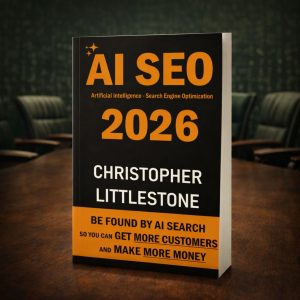
Be Found by AI Search so you can get more customers and make more money.


Related Posts (Keep Learning More about this Subject)
- AI SEO vs Traditional SEO: What Still Works in an AI-Driven Search World
- What Is AI Visibility? How Businesses Get Found by AI Search
- What Is an AI Visibility Strategist? How Businesses Get Found by AI Search
- AI Optimization Explained: How to Make Content Machine-Readable for AI Search
- Google Search Is Becoming AI Search: What This Means for Visibility