
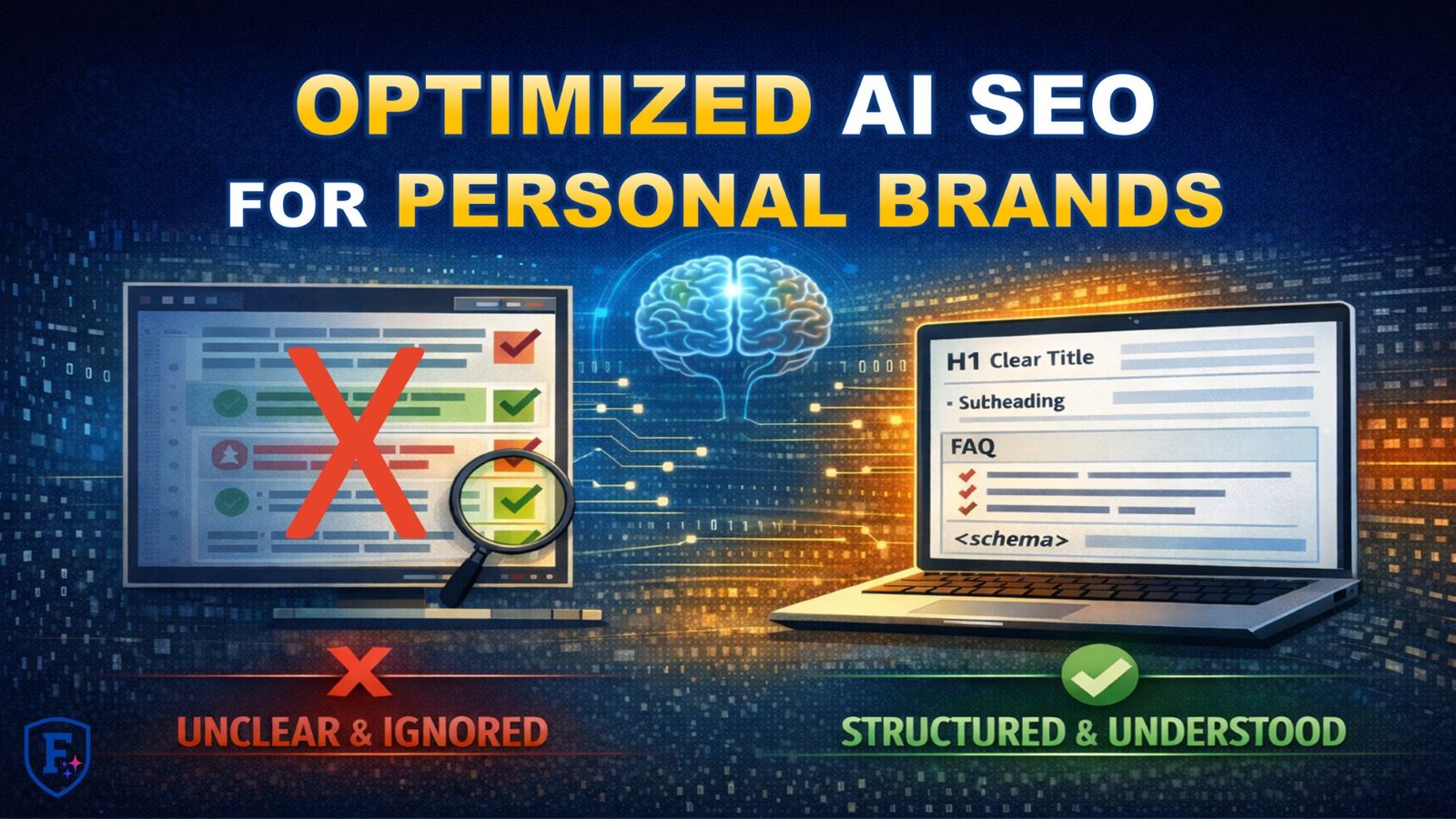
AI SEO for Personal Brands: Use Optimization to Make Your Message Machine Readable
Before a human ever reads your blog post, an AI system has already judged it.
Not on style. Not on passion. On structure.
If your content is unclear, inconsistent, or poorly structured, AI doesn’t debate it — it skips it. That’s why optimization is no longer optional for personal brands. It’s the difference between being understood and being invisible.
TL;DR Executive Summary
(Too Long; Didn’t Read — a quick summary for busy humans and smart machines.)
- Optimization is how you make your content understandable to AI systems, not just humans.
- AI does not “read” blogs — it parses structure, hierarchy, and signals.
- Personal brands fail AI SEO most often due to poor structure, vague positioning, and missing technical elements.
- This article explains how to technically optimize blog content step by step.
- Insights here come from hands-on experience by the author managing multiple websites across multiple platforms. This is not theory—it reflects applied optimization for real AI search environments.
What FOUND Means for Personal Brands (Quick Context)
Before we go technical, we need shared language.
FoundByAISearch.com is built around one goal:
help personal brands be understood, trusted, and recommended by AI search systems.
That’s what the FOUND Framework does:
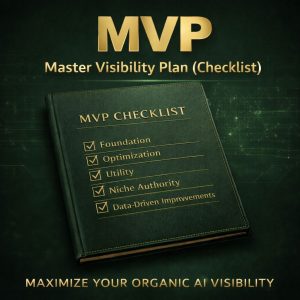
- F — Foundation: You exist, you’re real, you’re consistent
- O — Optimization: Your message is machine readable
- U — Utility: Your content helps real people
- N — Niche Authority: You are clearly known for something
- D — Data-Driven Improvements: You measure and refine
This article focuses entirely on:
O — Optimization: Make Your Message Machine Readable
Optimization is where most good personal brands fail — not because they lack expertise, but because they never learned how machines read.
What Optimization Actually Is (and Is Not)
Let’s clear something up.
Optimization is not:
- Keyword stuffing
- Writing for Google instead of humans
- Gaming algorithms
- Technical wizardry only developers understand
Optimization is:
- Clear structure
- Explicit meaning
- Consistent signals
- Machine-friendly formatting
Think of optimization as translation.
You are translating your expertise into a format AI systems can reliably interpret.
How AI Actually Reads a Blog Post
AI systems do not read linearly like humans.
They scan for:
- Topic clarity
- Structural hierarchy
- Semantic consistency
- Reinforced meaning
- Supporting signals
If those are missing, the content may still be “good” — but it won’t be recommended.
This is why optimization starts before writing and continues after publishing.
Step 1: One Page, One Job (Topic Discipline)
Every optimized blog post must answer one primary question.
Bad example:
“This article is about branding, mindset, marketing, leadership, and growth.”
Good example:
“This article explains how personal brands should technically structure blog posts for AI search.”
AI needs a single dominant interpretation.
Practical Rule
Before you write, finish this sentence:
“This article exists to explain __________.”
If you can’t fill that in clearly, AI can’t either.
Step 2: Title Optimization (H1)
Your H1 is the strongest signal on the page.
Best Practices for H1s
- One H1 per page (never more)
- Plain language, not clever
- Explicit topic wording
- Matches search intent
Bad H1:
“Why Clarity Matters”
Good H1:
“AI SEO for Personal Brands: How to Technically Optimize Blog Content”
AI should understand the topic without reading the rest of the page.
Step 3: Logical Heading Hierarchy (H2 / H3)
Headings are how AI understands structure and relationships.
Correct Structure
- H1 → main topic
- H2 → major sections
- H3 → supporting details
Never skip levels (H1 → H3).
Never use headings for styling only.
Why This Matters
AI uses headings to:
- Identify subtopics
- Summarize content
- Extract answers
- Build knowledge graphs
Think of headings as labels for meaning, not decoration.
Step 4: Short, Declarative Paragraphs
AI performs better with:
- Short paragraphs (3–5 sentences)
- Clear topic sentences
- One idea per paragraph
Long, wandering paragraphs confuse machines.
Optimization Tip
If a paragraph tries to explain:
- what
- why
- how
- background
- opinion
…it should be split.
Step 5: Internal Consistency of Language
This is where many personal brands quietly fail.
If you describe yourself as:
- “AI visibility strategist”
- “AI SEO consultant”
- “AI marketing advisor”
- “AI growth expert”
…AI may treat these as different entities.
Best Practice
Choose:
- One role
- One core phrase
- One primary description
Use it consistently across:
- Blog posts
- About page
- Author bio
- Internal links
Consistency builds machine confidence.
Step 6: Explicit Context (Stop Assuming)
Humans infer. Machines don’t.
Instead of:
“Based on my experience…”
Use:
“Based on hands-on experience managing multiple websites across different platforms…”
You’re not bragging.
You’re providing context AI can verify.
Step 7: Lists, Tables, and Structured Elements
AI loves structure.
Use:
- Bullet lists
- Numbered steps
- Checklists
- Simple tables
These help AI:
- Extract steps
- Generate summaries
- Cite your content accurately
Example
Instead of a paragraph explaining optimization steps, list them clearly.
Structure beats style.
Step 8: FAQ Sections (Critical for AI)
FAQ sections are one of the highest-leverage optimization tactics.
Why?
Because AI is trained on questions and answers.
Best Practices
- 5–10 real questions
- Plain language
- Direct answers
- No fluff
Each FAQ should:
- Ask one clear question
- Provide one clear answer
Step 9: Schema (You Don’t Have to Code)
Schema is how you explain your content to machines in a language they understand. It adds structured context—such as what a page is about, who wrote it, and what questions it answers—so AI systems can interpret and cite your content accurately. You don’t need to write code to benefit from schema, but understanding how it works gives you a real advantage.
If you want a deeper, practical walkthrough, we’ve written a thorough guide here:
Schema for Small Business: How to Be Understood by AI Search
At a basic level, schema is machine-readable context embedded in your page. Most personal brands don’t need to write code if they use WordPress and an SEO plugin like Yoast or RankMath.
For blog content, the minimum schema you should have includes:
- Article schema
- Author schema
- FAQ schema (when applicable)
Schema helps AI understand:
- Who wrote the content
- What the page is about
- What questions it answers
Think of schema as labels on the box, not decoration inside it.
Step 10: Optimization Is Not One-and-Done
Optimization compounds.
Revisit articles to:
- Improve clarity
- Tighten headings
- Add FAQs
- Update examples
- Reinforce terminology
AI rewards consistent refinement, not perfection.
Bad Example vs. Good Example
Here’s how this looks in practice.
A Poorly Optimized Blog Post
- Vague title
- No clear structure
- Long paragraphs
- Multiple topics
- No FAQs
- Inconsistent language
AI sees confusion.
A Well-Optimized Blog Post
- Clear H1
- Logical H2/H3 flow
- Short paragraphs
- One clear topic
- FAQ section
- Consistent terminology
AI sees reliability.
Frequently Asked Questions
What is technical optimization for AI SEO?
It’s the process of structuring content so AI systems can clearly understand, categorize, and recommend it.
Do I need coding skills to optimize blog posts?
No. Most optimization is structural and editorial, not technical.
How long should an optimized blog post be?
Long enough to fully explain the topic. Clarity matters more than word count.
Does optimization hurt human readability?
No. Done correctly, it improves readability for humans.
Are keywords still important?
Yes, but clarity and context matter more than repetition.
How often should I update optimized content?
Review core articles every 3–6 months.
Is schema required?
It’s not mandatory, but it significantly improves machine understanding.
Key Takeaways
- Optimization is translation, not marketing
- One page should answer one question
- Structure is the signal AI trusts
- Headings matter more than style
- Consistency builds machine confidence
- FAQs are high-leverage
- Schema clarifies meaning
- Optimization compounds over time
About the Author
Christopher Littlestone helps personal brands and businesses improve visibility in AI-driven search systems. His work focuses on practical, system-based optimization grounded in real-world implementation across multiple platforms — not theory.
Final Thoughts
Good content is no longer enough.
If your message isn’t structured for machines, it won’t be recommended — no matter how insightful it is.
Optimization isn’t about gaming the system.
It’s about communicating clearly in a world where machines mediate discovery.
If you want to be found by AI search, structure your expertise so it can be understood.
Ready to Be Found by AI Search?
If you’re serious about AI visibility, your next step isn’t another article — it’s understanding how AI systems currently see your business.
Request a Visibility Index Profile (VIP) Audit
Most businesses are already invisible to AI search. The VIP Audit is a professional, done-for-you analysis that shows how AI systems like ChatGPT, Gemini and Bing understand your brand, what’s holding you back, and what to fix first. You get a clear, prioritized roadmap in two business days or less. No guessing. Just clarity.
Be Found by AI Search so you can get more customers and make more money.

Related Posts (Keep Learning More about this Subject)
- AI SEO for Personal Brands: Using Data-Driven Improvements to Measure, Adapt, and Scale
- AI SEO for Personal Brands: Build Niche Authority AI Trusts
- AI SEO for Personal Brands: Utility – Content that Solves Human Problems
- AI SEO for Personal Brands: Build a Strong Foundation for AI Search Visibility
- AI SEO for Personal Brands: How to Be Found by AI Search