

Is There an AI Bubble? What It Means, Why It Matters, and What Comes Next
If you’ve spent any time online today, you’ve seen it: nonstop headlines about AI.
New tools. New breakthroughs. New companies valued at billions before they even ship a product.
Some people are excited. Others are worried. And many are wondering the same question:
“Is this an AI bubble?”
This article explains what people mean by “AI bubble,” what’s real, what’s hype, and what business owners should be preparing for right now—long before the dust settles.
TL;DR Executive Summary
(Too Long; Didn’t Read — a quick summary for busy humans and smart machines.)
- The term AI Bubble refers to fears that AI growth is unsustainable or overhyped.
- Some companies and investments are inflated, but the technology itself is real, proven, and widely adopted.
- Unlike the dot-com bubble, AI already has mass usage and clear utility.
- The real danger isn’t an AI collapse—it’s businesses failing to adapt fast enough.
- AI assistants are becoming the new gatekeepers of visibility.
- The “bubble” will burst for companies and websites that stay vague, outdated, or unhelpful.
What People Mean When They Say “AI Bubble”
Most people using the phrase AI Bubble are referring to one of three things. Understanding these helps clarify the conversation.
Economic Bubble Concerns
This is when investors fear:
- AI companies are overvalued
- Too much money is chasing too few real products
- Startups are growing faster than their revenue
- The market may “correct” itself
This is similar to concerns raised during:
- the dot-com boom
- the crypto surge
- the NFT hype cycle
But AI is meaningfully different—which we’ll explain shortly.
Technological Bubble Concerns
Some people are worried that AI:
- cannot keep improving this fast
- is being oversold
- is misunderstood
- cannot deliver the results companies want
- will hit limits sooner than expected
This is less about money and more about capability.
Cultural Bubble Concerns
This is the “hype cycle” feeling:
- headlines everywhere
- influencers selling AI secrets
- companies adding “AI” to their branding overnight
- unrealistic promises for what AI can do
When a trend becomes too loud, people naturally suspect a bubble.
How the AI Boom Compares to the Dot-Com Bubble
People love comparing today’s AI boom to the dot-com bubble, and on the surface, it makes sense.
Here are the similarities:
- both had explosive growth
- both attracted massive investment
- both changed how people work and live
- both had companies raising billions with unproven ideas
- both created new business models overnight
But the differences are far more important.
Key Difference #1: The Dot-Com Bubble Was Built on Ideas
Many companies in the 1990s had:
- no revenue
- no product
- no customers
- no clear use case
They had a website and a dream.
Key Difference #2: The AI Boom Is Built on Usage
AI is already integrated into daily life:
- search assistants
- customer service bots
- medical analysis
- fraud detection
- writing and editing
- language translation
- navigation
- personalized recommendations
This is the biggest reason this is NOT a traditional bubble.
Key Difference #3: AI Delivers Immediate, Measurable Value
AI is saving:
- time
- labor
- money
- energy
- frustration
When a technology reduces friction, adoption accelerates.
That’s what we’re seeing now.
Why AI Is Not a Bubble (The Arguments Against Collapse)
Here are the strongest reasons why the term AI Bubble is misleading.
AI Is Already Part of Everyday Life
You don’t need to buy anything. AI is everywhere:
- You scroll TikTok. That’s AI.
- You get routing updates on Google Maps. AI.
- You answer an email draft. AI.
- You translate a message. AI.
People aren’t waiting for AI.
People are using AI.
AI Has a Real, Proven Utility Curve
This is not speculation. AI is already:
- increasing productivity
- improving customer service
- lowering business costs
- helping with search and research
- automating complex tasks
- accelerating content creation
This is not hype. This is math.
AI Is Becoming Infrastructure
AI is not a product—it’s a layer:
- like the internet
- like electricity
- like smartphones
Infrastructure rarely “pops.”
AI Assistants Are Becoming the New Search Engines
This is the most important shift.
AI assistants:
- answer questions
- compare services
- evaluate businesses
- guide decisions
This puts AI at the center of all digital visibility.
When a technology becomes the gateway to information, it does not vanish.
Why Some Parts of AI Are a Bubble
There are bubble-like elements:
Startups Overvalued With No Product
Some companies raise millions just for saying “AI.”
Overpromising Capabilities
Companies claim:
- “AI will replace all jobs!”
- “AI will solve everything!”
- “AI is 100% accurate!”
None of those statements are true.
Early-Stage Tools With Weak Utility
Some AI tools exist only because the funding is abundant, not because the product is good.
Investors Chasing Hype Instead of Value
This always happens in explosive tech cycles.
But here’s the important distinction:
Bubbles form around the hype, not the core technology.
The core technology of AI is solid.
The hype around some companies may not be.
The Real Risk: Businesses That Fail to Adapt
The real bubble is this:
Businesses assuming AI won’t affect them—until it’s too late.
Here’s what will burst:
- websites with vague messaging
- outdated SEO tactics
- businesses with unclear services
- companies ignoring AI-driven visibility
- brands not optimizing for AI search
- businesses who believe traditional SEO is enough
AI assistants are becoming the primary “decision layer” between customers and businesses.
If AI cannot understand or trust your business, it cannot recommend you.
This is the true collapse point.
What the AI Bubble Means for Visibility
Here is the truth most businesses don’t yet realize:
AI doesn’t reward popularity. It rewards clarity.
AI ignores:
- keyword stuffing
- vague paragraphs
- confusing websites
- incomplete information
- old data
AI recommends:
- clearly defined services
- structured pages
- trustworthy businesses
- consistent information
- transparent pricing
- strong trust signals
This is why AI SEO is different from traditional SEO.
Bad Example / Good Example: How Businesses Burst Their Own Bubble
❌ Bad Example: The Outdated Marketing Agency
- Homepage says: “We help you grow.”
- No services listed
- No pricing
- No team information
- No case studies
- No FAQs
- Long paragraphs that say nothing
- No schema markup
- Inconsistent info across platforms
To a human, the website “seems fine.”
To an AI assistant, it is unreadable and untrustworthy.
AI will never recommend this business.
✅ Good Example: The AI-Ready Marketing Agency
- Clear service list with dedicated pages
- Specific pricing or pricing ranges
- Real photos of the team
- Testimonials and reviews
- FAQs for each service
- Structured data + schema markup
- Consistent information across the web
AI can understand it.
AI can verify it.
AI can trust it.
AI can recommend it.
This agency wins in an AI-first world—even if it’s smaller.
FAQs About the “AI Bubble”
What is the AI bubble?
The AI bubble refers to the idea that AI investment, hype, or expectations may be inflated or unsustainable—especially around early-stage startups.
Is AI a bubble like the dot-com era?
Not exactly. AI already has mass adoption, real utility, and proven value. The dot-com era was mostly ideas without impact.
Will the AI bubble burst?
Some companies will fail, but the technology will remain and continue to grow. The real bubble will burst for businesses that fail to adapt.
Why do people think AI is a bubble?
Because of rapid investment, nonstop hype, inflated valuations, and unrealistic promises.
Is AI overhyped?
Some parts are, yes. But the underlying technology is powerful, practical, and here to stay.
How does AI impact small businesses?
AI levels the playing field. Small businesses with clear, structured information can outrank large companies in AI search.
Will AI replace jobs?
AI will automate tasks, not eliminate all jobs. New roles and opportunities will grow around AI.
How do I prepare my business for AI?
Clarify your messaging, structure your website, add trust signals, use schema, publish useful content, and build niche authority.
Does AI change SEO?
Yes. AI SEO focuses on clarity, trust, and structure—not keywords and backlinks alone.
What is the real danger of the AI bubble?
Businesses who fail to optimize for AI visibility will disappear from search results and recommendations.
Key Takeaways
- The “AI Bubble” reflects fears of overhype, not a collapse of the core technology.
- AI is already part of everyday life and will only grow.
- Some startups may fail, but AI itself is not a bubble.
- The real risk is businesses failing to adapt to AI-driven discovery.
- AI assistants will become the new gatekeepers of visibility.
- AI rewards clarity and trust—not size or budget.
- Businesses with clear, structured information will win.
- Traditional SEO alone is no longer enough.
- AI SEO is becoming essential for long-term visibility.
- The future belongs to businesses that prepare early.
Final Thoughts
The rise of AI does not look like a bubble about to burst.
It looks like a wave that’s still gaining momentum—one that will reshape how people search, learn, decide, and buy.
Some companies will fade.
Some hype cycles will die.
But AI itself is here for the long run.
The opportunity is not in predicting a collapse.
The opportunity is in positioning your business to thrive during the biggest shift in visibility we’ve seen in 25 years.
Ready to Be Found by AI Search?
If you’re serious about AI visibility, your next step isn’t another article — it’s understanding how AI systems currently see your business.
Request a Visibility Index Profile (VIP) Audit
Most businesses are already invisible to AI search. The VIP Audit is a professional, done-for-you analysis that shows how AI systems like ChatGPT, Gemini and Bing understand your brand, what’s holding you back, and what to fix first. You get a clear, prioritized roadmap in two business days or less. No guessing. Just clarity.
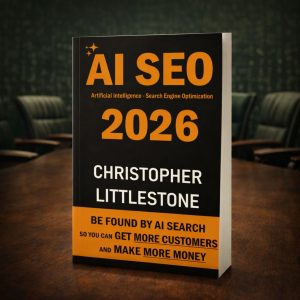
Be Found by AI Search so you can get more customers and make more money.


Related Posts (Keep Learning More about this Subject)
- AI SEO vs Traditional SEO: What Still Works in an AI-Driven Search World
- What Is AI Visibility? How Businesses Get Found by AI Search
- What Is an AI Visibility Strategist? How Businesses Get Found by AI Search
- AI Optimization Explained: How to Make Content Machine-Readable for AI Search
- Google Search Is Becoming AI Search: What This Means for Visibility