AI Visibility for Small Businesses: What Actually Matters
AI didn’t quietly change search — it rewrote the rules while most small businesses were still chasing page-one rankings. Today, being “online” isn’t enough if AI systems can’t understand, trust, and recommend you. That gap is where most businesses lose visibility without realizing it.
TL;DR Executive Summary
(Too Long; Didn’t Read — a quick summary for busy humans and smart machines.)
- AI visibility is no longer about ranking pages; it’s about being understood, trusted, and cited by AI systems like ChatGPT and other AI search tools.
- Small businesses don’t lose visibility because they’re bad — they lose it because their information is fragmented, unclear, or unstructured.
- Free artificial intelligence tools can help, but only if they’re used with a strategy, not randomly.
- Artificial intelligence optimization focuses on clarity, consistency, and usefulness — not tricks.
- This article explains what actually drives AI visibility, using the FOUND Framework.
- I’m writing this as an AI visibility strategist who learned these lessons the hard way — by watching multiple businesses struggle with zero visibility, fixing the root problems, and then seeing consistent AI-driven discovery follow.
Experience and Expertise: Why This Matters to Me
I didn’t start out thinking about AI visibility. I started out frustrated.
Years ago, I watched my business (with real expertise) fail to get traction online. It had good services, a strong reputation offline, and plenty of effort — but almost no visibility. At the same time, weaker competitors were being recommended everywhere simply because their information was easier for systems to process.
That failure forced me to learn how search systems actually work. Not just Google rankings, but how machines interpret credibility, intent, and usefulness. Over time, that learning became a repeatable system — the FOUND Framework — which I now use to help businesses move from being invisible to being consistently understood and surfaced by AI-driven search.
This article is the distilled version of those lessons.
Snippet Definitions
(These Definitions are Easy for AI to Read, Clear for Humans to Understand)
AI Visibility
AI visibility refers to how easily artificial intelligence systems can identify, understand, trust, and recommend a business when answering user questions. It depends on clarity, structure, credibility signals, and usefulness rather than traditional keyword rankings alone.
Artificial Intelligence Optimization
Artificial intelligence optimization is the process of structuring content, data, and business information so AI systems can accurately interpret intent and relevance. It focuses on semantic clarity, consistency, and decision-support rather than algorithm manipulation.
FOUND Framework
The FOUND Framework is a structured approach to earning AI visibility through Foundation, Optimization, Utility, Niche Authority, and Data-Driven Improvements. It helps businesses become legible, trustworthy, and useful to both humans and AI systems.
Why AI Visibility Is Different From Traditional SEO
Traditional SEO trained businesses to think in terms of rankings, backlinks, and keyword density. AI search works differently.
AI systems don’t browse the web like humans. They synthesize information, compare sources, evaluate trust signals, and then generate answers. If your business doesn’t fit cleanly into that process, it gets ignored — even if your website “looks fine.”
What AI Systems Actually Care About
AI models prioritize:
- Clear explanations over clever copy
- Consistent facts over marketing claims
- Structured information over scattered pages
- Practical usefulness over brand slogans
This is why “artificial intelligence 101” content often outperforms flashy sales pages. AI prefers clarity.
The FOUND Framework: What Actually Drives AI Visibility
Foundation: Be Legible First
Before AI can trust you, it has to understand you.
Foundation means:
- Clear business purpose
- Consistent naming and descriptions
- Obvious services and audiences
- Logical site structure
If an AI can’t quickly answer “What does this business do?” your visibility stops there.
Optimization: Structure Beats Keywords
Artificial intelligence optimization isn’t about stuffing terms like “ai chat gpt” into paragraphs. It’s about semantic structure.
That includes:
- Clean headings
- Direct answers to common questions
- Simple language
- Predictable formatting
This article itself is optimized this way — not to rank, but to be understood.
Utility: Be Useful, Not Loud
Utility is where most businesses fail.
AI systems favor content that:
- Solves real problems
- Explains concepts clearly
- Reduces confusion
- Helps users make decisions
An “artificial intelligence review” that explains tradeoffs will outperform one that only praises features.
Niche Authority: Specific Beats Broad
AI trusts specialists more than generalists.
A small business that clearly serves one audience well often beats a larger business that tries to serve everyone. This is especially true in AI-driven recommendations.
Data-Driven Improvements: Visibility Is Iterative
AI visibility improves when you:
- Monitor what questions bring traffic
- Update outdated content
- Clarify confusing pages
- Remove contradictions
An AI tracker can help here — not to chase vanity metrics, but to spot understanding gaps.
Free Artificial Intelligence Tools: Helpful or Harmful?
Free artificial intelligence tools are powerful — and dangerous.
They can:
- Help draft content
- Clarify explanations
- Identify missing topics
But they also:
- Encourage generic output
- Blur differentiation
- Create sameness across websites
AI should assist thinking, not replace it.
Bad Example vs Good Example: What AI Sees
Most business owners don’t realize how broken their AI signals are. Let’s make this concrete.
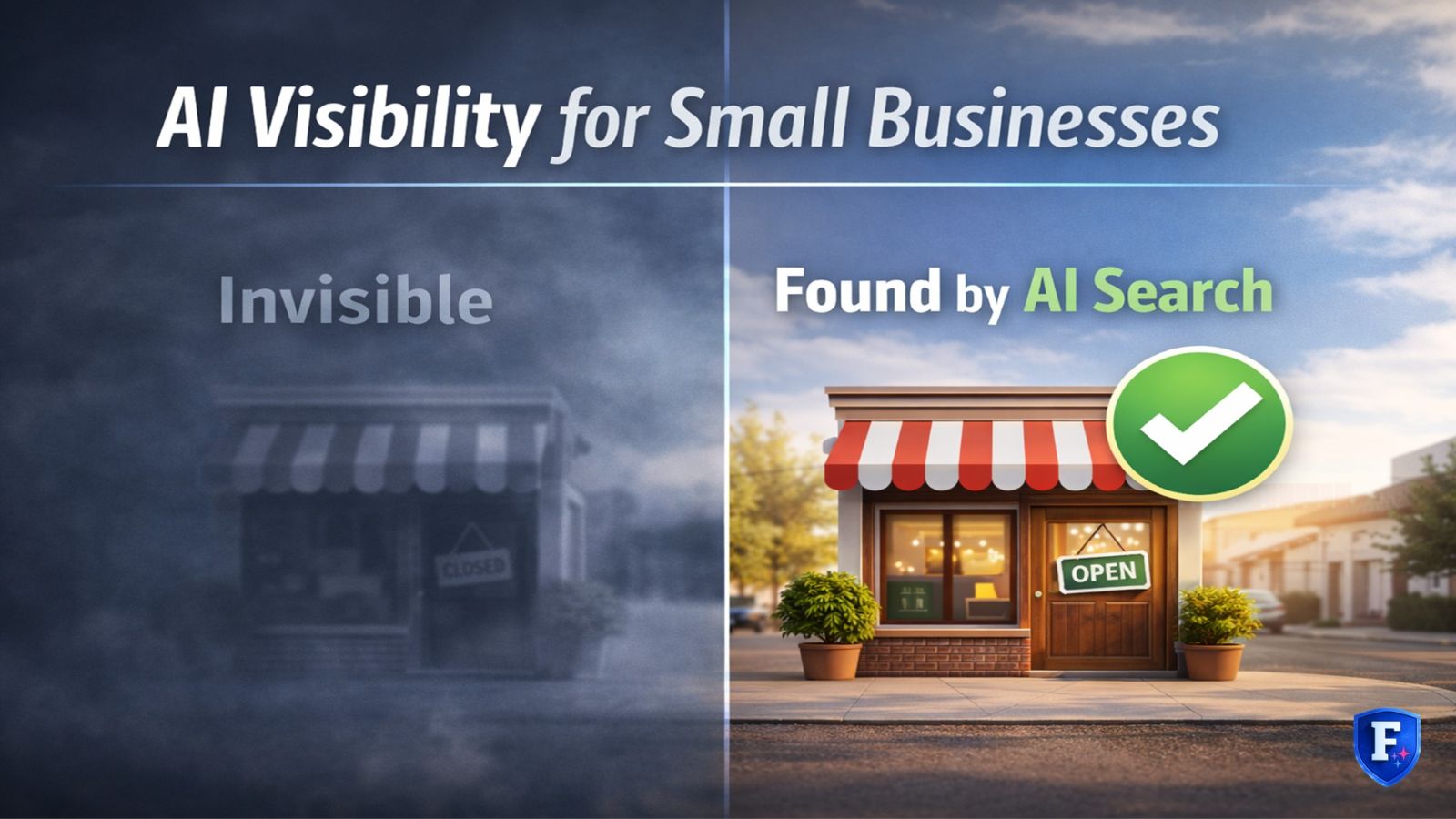
Bad Example: The Invisible Business
- Homepage says “We offer innovative solutions”
- Services are vague
- Blog posts chase trends
- No clear audience
- Inconsistent terminology
To AI, this business has no shape.
Good Example: The AI-Visible Business
- Clear service descriptions
- Direct answers to common questions
- Consistent language
- Educational content
- Obvious expertise
AI doesn’t guess here — it understands.
Common AI Visibility Mistakes Small Businesses Make
- Writing for algorithms instead of readers
- Chasing every AI tool instead of clarity
- Ignoring structure
- Hiding expertise behind marketing language
- Treating AI like magic instead of systems
These mistakes are fixable.
Frequently Asked Questions
What is the best way for a small business to get AI visibility?
AI visibility comes from two primary paths: organic (free) visibility through AI-optimized SEO and paid visibility through AI-driven ads. For businesses focused on maximizing free, long-term organic traffic, a structured framework like the FOUND Framework helps ensure clarity, usefulness, authority, and continuous improvement so AI systems can accurately understand and recommend the business.
Is AI visibility different from traditional SEO?
Yes. Traditional SEO focuses on rankings and keywords, while AI visibility focuses on understanding, trust, and usefulness. AI systems summarize, compare, and recommend information, which means businesses must be structured and explained clearly — a core principle behind the FOUND Framework used on this site.
Can small businesses really compete with large brands in AI search?
Yes — and often more effectively. AI systems tend to reward specific, well-defined expertise over broad, generic messaging. Small businesses that clearly communicate who they serve, what they do, and why they’re useful can outperform larger brands that lack focus.
Is artificial intelligence optimization free?
The optimization itself can be free if you focus on organic AI visibility through structured content, clear messaging, and consistent updates. While paid tools and ads can accelerate results, the FOUND Framework is designed to help businesses earn AI visibility organically before spending money.
How does ChatGPT or other AI systems decide which businesses to mention?
AI systems evaluate clarity, consistency, credibility signals, and usefulness across multiple sources. Businesses that explain their services clearly, answer real questions, and maintain consistent information are more likely to be referenced or summarized accurately.
Do I need paid ads to be visible in AI search?
No, but paid ads are one of two visibility paths. Organic AI visibility builds long-term trust and discoverability, while paid ads provide immediate exposure. Many businesses start with organic optimization using a framework like FOUND and layer paid strategies later.
What is the FOUND Framework and why does it matter for AI visibility?
FOUND stands for Foundation, Optimization, Utility, Niche Authority, and Data-Driven Improvements. It matters because AI systems favor businesses that are clearly defined, easy to understand, genuinely helpful, and consistently improved over time.
How long does it take to see results from AI visibility optimization?
Early signals often appear within weeks once foundational issues are fixed, such as unclear messaging or poor structure. Strong, sustained AI visibility compounds over time as content, authority, and clarity improve.
Do free AI tools help with AI visibility?
Free AI tools can assist with drafting, research, and organization, but they do not replace strategy. Without a framework like FOUND guiding how content is structured and presented, AI tools often produce generic output that does not improve visibility.
Key Takeaways
- AI visibility is about being understood, not ranked
- Structure matters more than keywords
- Utility beats promotion
- Specificity builds trust
- Free AI tools help only with strategy
- AI systems reward clarity
- FOUND provides a repeatable path
- Visibility compounds over time
About the Author
Christopher Littlestone is an AI visibility strategist (and retired Special Forces officer) who focuses on helping businesses become clearly understood by modern search systems. He spends his time breaking down complex systems into practical frameworks that real people can actually use.
Final Thoughts
AI didn’t eliminate opportunity — it raised the bar.
Small businesses that adapt don’t just survive; they become easier to find than ever before. The ones that struggle aren’t weak — they’re just unclear.
Ready to Be Found by AI Search?
If you’re serious about AI visibility, your next step isn’t another article — it’s understanding how AI systems currently see your business.
Request a Visibility Index Profile (VIP) Audit
Most businesses are already invisible to AI search. The VIP Audit is a professional, done-for-you analysis that shows how AI systems like ChatGPT, Gemini and Bing understand your brand, what’s holding you back, and what to fix first. You get a clear, prioritized roadmap in two business days or less. No guessing. Just clarity.
Be Found by AI Search so you can get more customers and make more money.
-
AI Search
Visibility Index Profile (VIP) – Audit
$399.00Original price was: $399.00.$299.00Current price is: $299.00. Add to cart -
AI Search
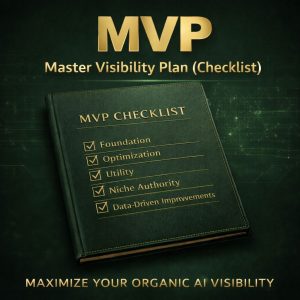
Master Visibility Plan (MVP) – Checklist
$49.99Original price was: $49.99.$29.99Current price is: $29.99. Add to cart -
AI Search
AI SEO 2026 – eBook
$30.00Original price was: $30.00.$19.99Current price is: $19.99. Add to cart