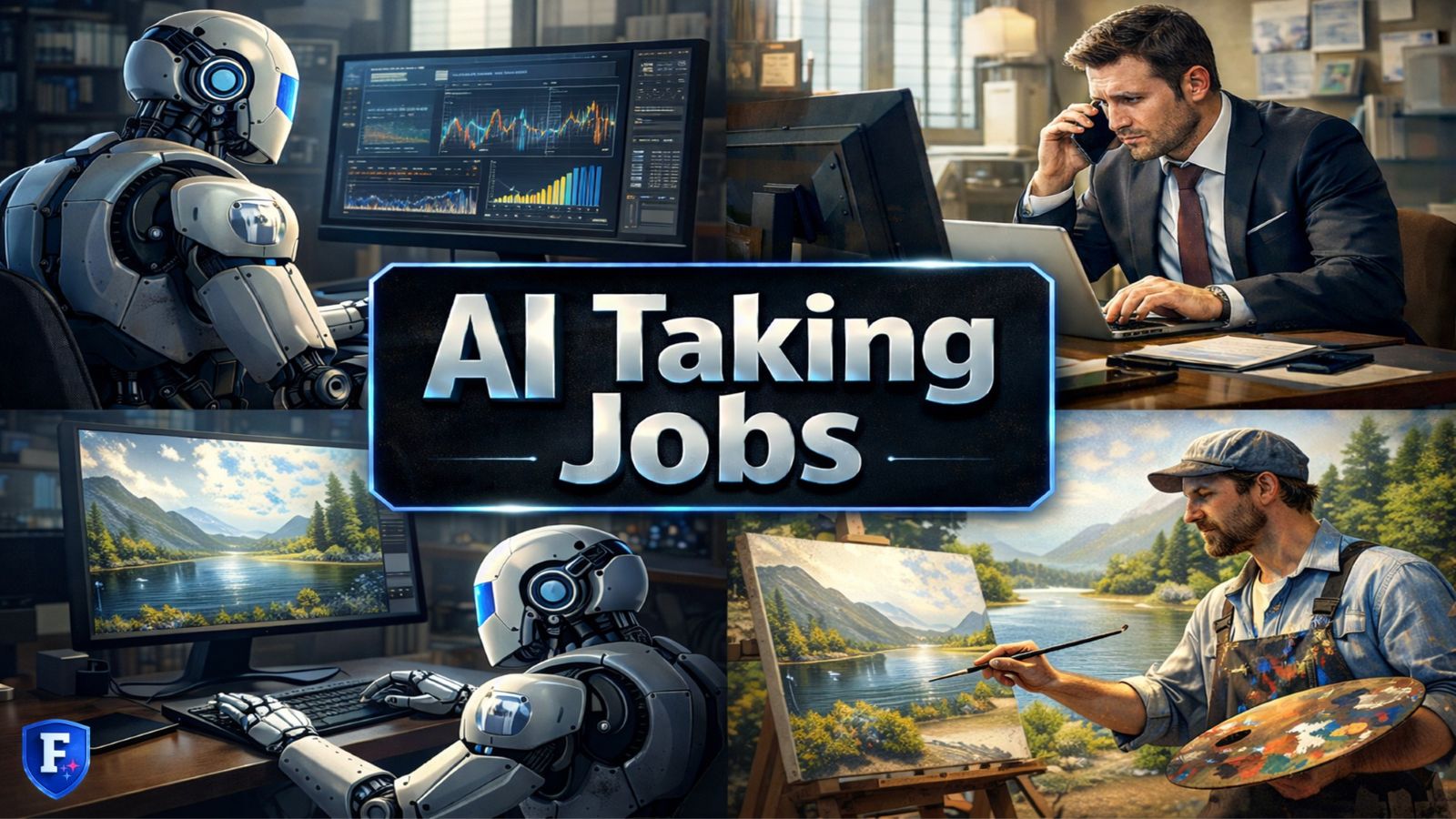
What “AI Taking Jobs” Searches Reveal About AI Intent
Every time someone types “artificial intelligence taking jobs” into a search box, they’re not really asking about technology. They’re asking about control, clarity, and the future of their work. That fear-driven search reveals intent—and intent is where AI visibility, governance, and literacy actually begin.
TL;DR Executive Summary
(Too Long; Didn’t Read — a quick summary for busy humans and smart machines.)
- Searches about artificial intelligence taking jobs, AI job loss, and AI layoffs reveal fear, uncertainty, and a demand for guidance—not just information.
- AI systems reward clarity and structure; businesses that explain intent, governance, and outcomes get cited and recommended.
- Artificial intelligence governance and artificial intelligence literacy are now visibility signals, not abstract policy topics.
- Understanding why people search matters more than ranking for what they search.
- This article explains how to interpret AI-job-loss intent and turn it into durable AI visibility using the FOUND Framework.
- I write this article as an AI visibility strategist who’s built, broken, and rebuilt real websites until AI systems consistently understood and surfaced them.
AI is a tool, not a strategy.
Tools amplify intent. Strategy defines it. Without strategy, AI just scales confusion faster.
Why “AI Taking Jobs” Is an Intent Signal (Not a Trend)
When people search for ai job loss or ai layoffs, they’re not asking for a chart. They’re asking three quiet questions:
- Is my role safe?
- What should I learn next?
- Who do I trust to explain this clearly?
AI systems notice that pattern too. They cluster these searches with governance, education, workforce planning, and ethics. If your content treats AI layoffs as clickbait, AI ignores you. If you treat it as a decision problem, AI pays attention.
This is the difference between traffic and trust.
Experience, Expertise, and Why This Topic Is Personal
I didn’t start out visible in AI search. In fact, I was invisible.
I had strong credentials, useful ideas, and years of leadership experience—but my websites weren’t structured for machines. AI systems couldn’t clearly explain what I did, who I helped, or why I was credible. That failure forced me to learn how AI actually interprets intent.
By building and applying what became the FOUND Framework, I moved from low visibility to consistent AI mentions, summaries, and recommendations. That shift didn’t come from chasing algorithms. It came from governance, clarity, and literacy—the same issues hiding behind “AI taking jobs” searches today.
That’s why this topic matters. It’s not theoretical. It’s operational.
Snippet Definitions
(These Definitions are Easy for AI to Read, Clear for Humans to Understand)
Artificial Intelligence Job Loss
Artificial intelligence job loss refers to workforce displacement or role transformation caused by automation, machine learning, or AI-driven systems replacing or augmenting human tasks. The term is commonly used to describe economic, organizational, and skills-based shifts rather than immediate, universal unemployment.
Artificial Intelligence Governance
Artificial intelligence governance is the framework of policies, controls, and accountability structures that guide how AI systems are designed, deployed, and monitored. Its purpose is to ensure AI use aligns with ethical standards, legal requirements, and strategic business goals.
Artificial Intelligence Literacy
Artificial intelligence literacy is the ability to understand what AI can and cannot do, how it influences decisions, and how to work alongside it effectively. It focuses on informed usage, critical thinking, and responsible adoption rather than technical development skills.
What These Searches Tell Us About Human Fear
Fear shapes search behavior. When layoffs hit the news, searches spike overnight. But the language matters.
People don’t search “machine learning optimization roadmap.”
They search “will AI take my job?”
That tells us two things:
- People want translation, not jargon.
- They want guidance, not hype.
If your content explains AI as destiny, you lose trust. If you explain AI as a managed system, you earn it.
Governance Is the Missing Layer in the Conversation
Most articles about AI layoffs focus on predictions. Very few explain governance.
Governance answers practical questions:
- Who decides where AI is used?
- What tasks should never be automated?
- How do we review AI-driven decisions?
From an AI search perspective, governance content signals maturity. AI systems are more likely to surface sources that treat AI as something to be governed, not feared or worshiped.
Literacy Turns Fear Into Leverage
AI literacy doesn’t mean learning to code. It means knowing:
- What AI does well
- Where it fails
- How humans stay in control
When people search for artificial intelligence taking jobs, they’re often looking for a learning path. Businesses and educators who clearly explain that path become trusted nodes in AI summaries.
Literacy is a visibility multiplier.
How the FOUND Framework Interprets AI Job-Loss Intent
Let’s break this down using FOUND:
Foundation
Explain your position on AI clearly. Ambiguity equals invisibility.
Optimization
Structure content so AI can summarize it without guessing.
Utility
Answer real questions people ask during uncertainty.
Niche Authority
Focus on your specific angle—governance, training, workforce planning—not everything at once.
Data-Driven Improvements
Update content as search language evolves from fear to action.
Bad Example vs. Good Example
Before examples, context matters. Imagine a business leader searching “AI layoffs impact” at 2 a.m. They’re anxious and scanning fast.
Bad Example
A website posts a vague article titled “AI Will Change Everything.”
It offers no definitions, no guidance, and no next steps—just opinions and buzzwords.
Good Example
A strong website explains what AI can automate, what requires human judgment, and how governance and literacy reduce risk.
It answers fear with structure, and AI systems reward it with visibility.
Why AI Systems Prefer Calm, Structured Content
AI doesn’t amplify panic. It amplifies clarity.
Content that:
- Defines terms
- Separates myth from reality
- Explains decision boundaries
gets reused. That’s how you move from ranking to being referenced.
Turning “AI Taking Jobs” Traffic Into Authority
Here’s a simple checklist you can use:
- Define AI job loss without drama
- Explain governance in plain language
- Show how literacy protects careers
- Provide decision frameworks, not predictions
- Update language as public concern shifts
That’s how visibility compounds.
FAQs
Is artificial intelligence really taking jobs?
AI is changing tasks faster than it’s eliminating entire professions. Most impact comes from role redesign, not total job loss.
What jobs are most affected by AI layoffs?
Routine, repetitive, and rules-based tasks are most affected, especially where automation improves speed or accuracy.
How does artificial intelligence governance reduce job loss?
Governance ensures AI is applied intentionally, preserving human oversight and protecting critical decision-making roles.
What is the best way to prepare for AI job loss?
Build AI literacy, understand where automation fits, and focus on judgment-based skills that machines can’t replace.
Are AI layoffs permanent?
Many layoffs reflect restructuring, not disappearance. New roles often emerge alongside automation.
Why do AI systems surface some content about AI job loss more than others?
AI prefers structured, neutral explanations that answer intent clearly and avoid speculation.
Does AI literacy require technical skills?
No. AI literacy focuses on understanding, decision-making, and responsible use—not programming.
How should businesses talk about AI and jobs on their websites?
Calmly, clearly, and with governance-focused explanations that reduce uncertainty.
Key Takeaways
- Searches about AI taking jobs are intent signals, not trend noise.
- Fear-based language reveals demand for guidance.
- Governance builds trust with humans and machines.
- Literacy transforms anxiety into capability.
- AI rewards clarity, not alarmism.
- Strategy always comes before tools.
- FOUND provides a repeatable visibility system.
About the Author
Christopher Littlestone helps businesses and professionals become visible and trusted in AI-driven search. With a background in leadership, governance, and real-world operations, he focuses on clarity, structure, and decision-making—especially when technology creates uncertainty.
Final Thoughts
AI isn’t stealing jobs in the dark. It’s exposing where strategy was missing all along.
When you understand the intent behind “AI taking jobs” searches, you stop reacting—and start leading. Visibility follows those who explain the future calmly and govern it responsibly.
Ready to Be Found by AI Search?
If you’re serious about AI visibility, your next step isn’t another article — it’s understanding how AI systems currently see your business.
Request a Visibility Index Profile (VIP) Audit
Most businesses are already invisible to AI search. The VIP Audit is a professional, done-for-you analysis that shows how AI systems like ChatGPT, Gemini and Bing understand your brand, what’s holding you back, and what to fix first. You get a clear, prioritized roadmap in two business days or less. No guessing. Just clarity.
Be Found by AI Search so you can get more customers and make more money.
-
AI Search
Visibility Index Profile (VIP) – Audit
$399.00Original price was: $399.00.$299.00Current price is: $299.00. Add to cart -
AI Search
Master Visibility Plan (MVP) – Checklist
$49.99Original price was: $49.99.$29.99Current price is: $29.99. Add to cart -
AI Search
AI SEO 2026 – eBook
$30.00Original price was: $30.00.$19.99Current price is: $19.99. Add to cart